
The Pico5G Ultra
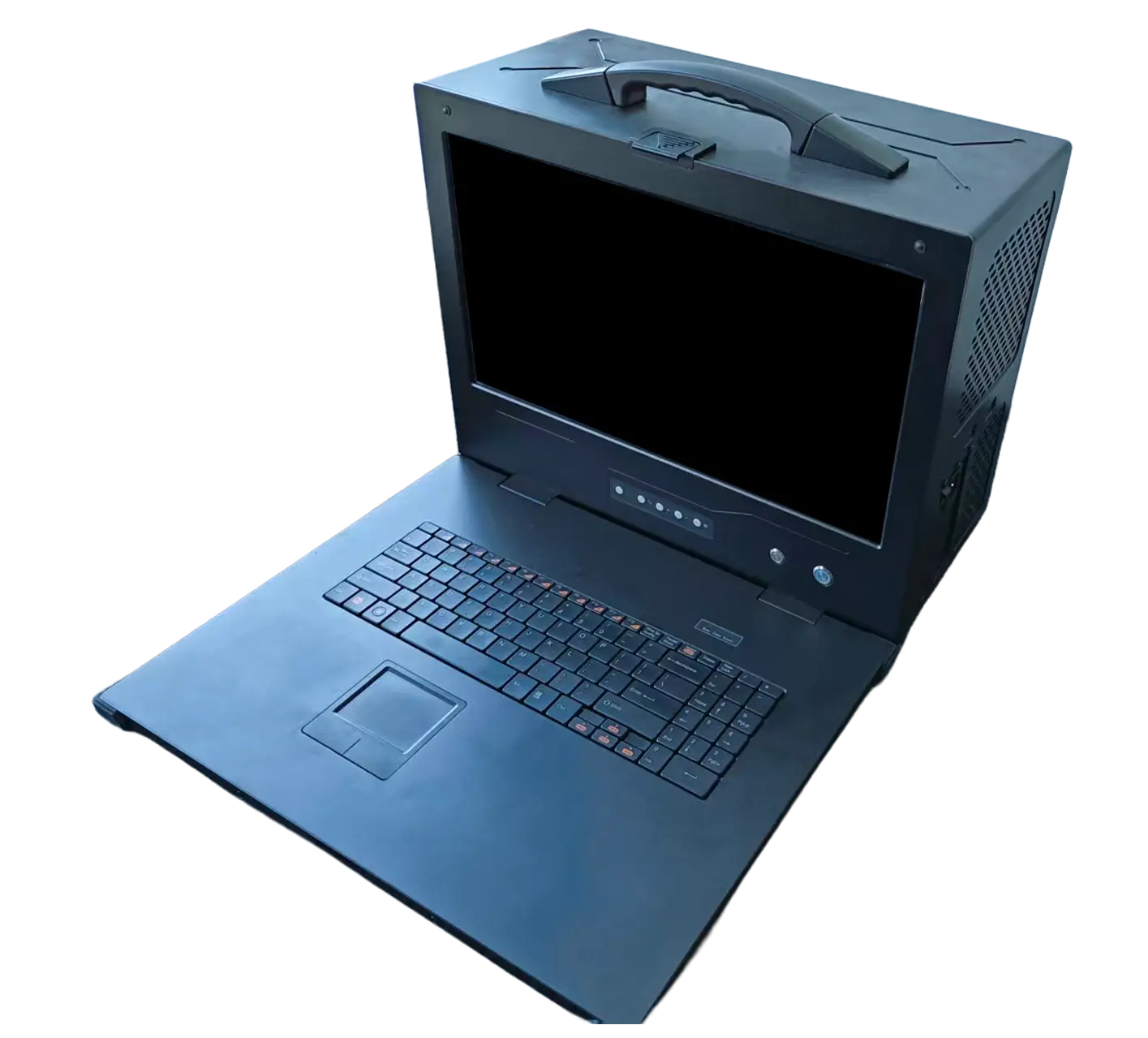
The most capable cellular testing platform in the Pico5G series. With four 100 MHz 4×4 SDR cards, the Ultra enables high-density multi-cell 5G testing, optional mmWave, and the highest throughput and UE count in the family.
Capabilities
4G and 5G Support
The Pico5G Ultra supports LTE, LTE-M, 5G SA, 5G non-SA, and 5G Reduced Capacity ((e)RedCap). Connects to CAT-M1 devices.
NB-IoT Support
The Pico5G Ultra supports standalone, in-band and guard-band NB-IoT to connect NB1 and NB2 devices.
NTN Support
The Pico5G Ultra supports NR-NTN and NB-IoT-NTN, including regenerative and transparent modes of operation. It works across all orbit types and comes with an integrated NTN channel simulator and constellation tool.
VoLTE VoNR VoWiFi
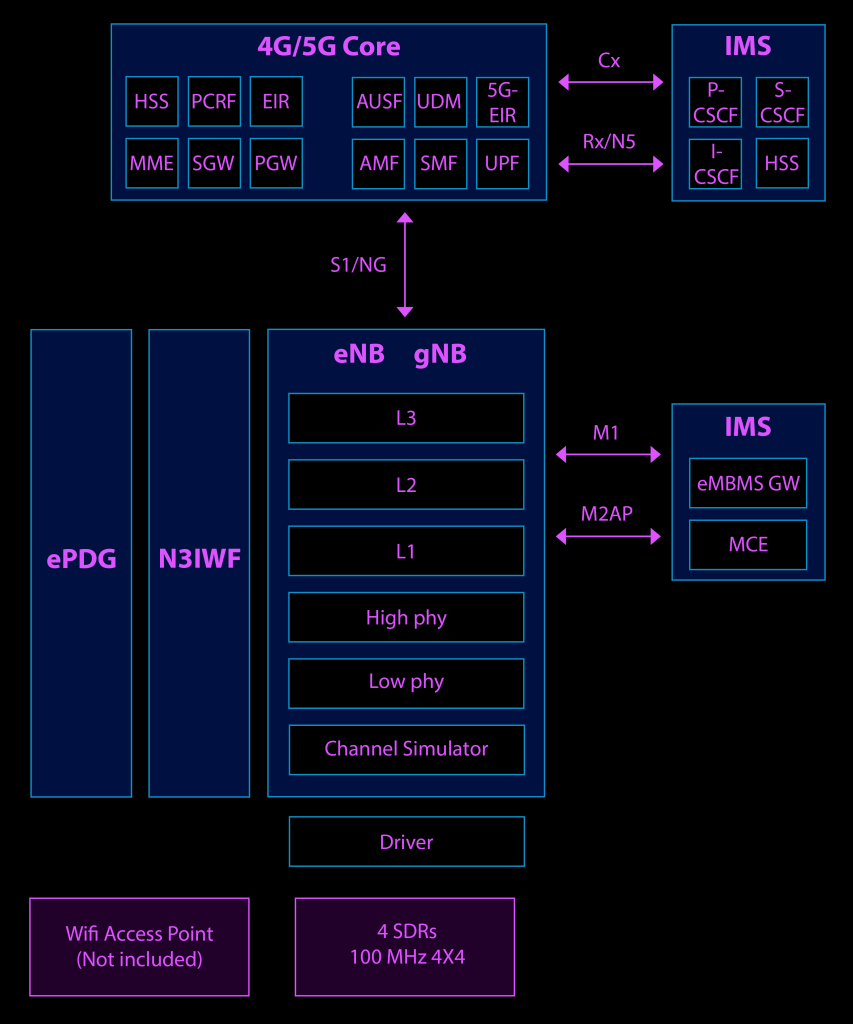
The Pico5G Ultra’s embedded IMS Server allows VoLTE, VioLTE, VoNR, VioNR, SMS and emergency call testing. The embedded N3IWF allows VoWiFi by connecting an external WiFi access point.
Up to 1000 UEs
The Pico5G Ultra is powered by a macro base station software, so it can handle up to 1000 concurrent active UEs.
6 Gbps - 2 Gbps
The Pico5G Ultra can deliver up 6 Gbps in downlink and 2 Gbps in uplink.
Carrier Aggregation
The Pico5G Ultra can aggregate multiple TDD and FDD LTE and NR FR1 cells for high throughput testing.
Features
Easy Configuration
Offers easy configuration thanks to JSON files with example configurations and a modern GUI with preloaded customizable scenarios and cases.
End-to-End and Feature Testing
Runs on standard Linux in user space mode allowing easy integration with IP services. Test features to override the nominal protocol behavior in order to simulate error cases.
Automatic Test Setup and Scripting
Offers WebSocket API allowing the sending of remote commands to ease test automation. Preconfigured, customizable test cases and scenarios get you started faster.
Logging and Measuring
Provides selective logging and display of all 3GPP LTE and NR stacks as well as useful graphs and analytic tools.
Channel Simulation
Simulates different DL channel types as per 3GPP models specified in 36.101 and 38.141 specifications. Simulation of NTN channels (delay and doppler) for GEO, MEO and LEO constellations.
High Performance and 3GPP Features
Supports multiple UEs and cells and high data rates in LTE and NR. Has early access to 3GPP features for rapid validation of features under development.
Frequency Agnostic
Supports a wide range of FDD and TDD frequency bands even nonstandard ones allowing to test in Sub-6GHz and mmWave.
Integrated Monitor and Keyboard
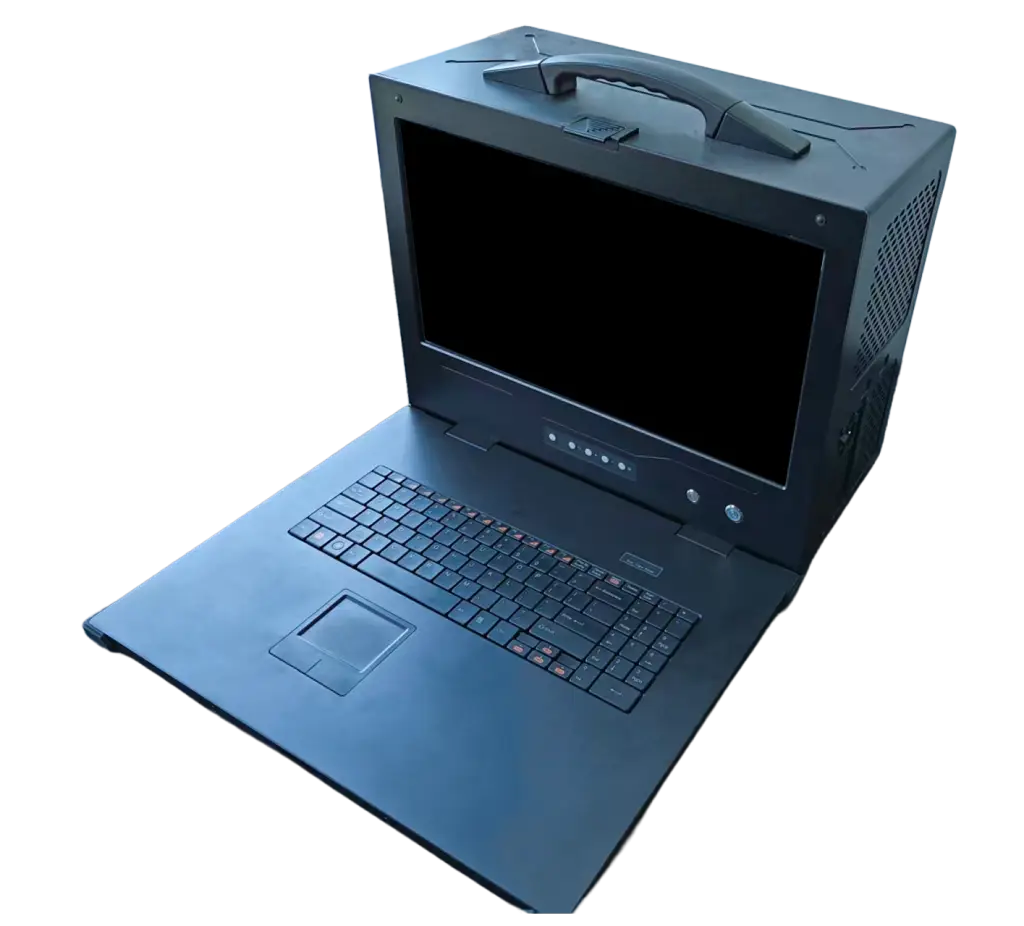
Equipped with a built-in monitor and keyboard directly in the chassis, allowing for full mobility.
The Pico5G Ultra runs the on-box AI test engineer: bring up cells, run your test campaigns, and diagnose failures with cited evidence from the network’s own logs. Ask in plain language and get answers you can check.
The same Ultra bench flies real LEO, MEO and GEO passes over a live NR or NB-IoT cell, with true delay and Doppler, against real devices over the air.
Possible RAN Configurations
Constraints:
The Pico5G Ultra integrates four SDR Cards, with each SDR capable of supporting two independent SISO or 2×2 MIMO 100 MHz channel or one 4×4 MIMO channel. This provides users with the following combinations:
- Four 100 MHz 4×4 channels
- Three 100 MHz 4×4 channels combined with two 100 MHz 2×2/SISO channels
- Two 100 MHz 4×4 channels combined with four 100 MHz 2×2/SISO channels
- One 100 MHz 4×4 channel combined with six 100 MHz 2×2/SISO channels
- Eight 100 MHz 2×2/SISO channels
Each channel can support multiple contiguous cells, provided that the total bandwidth and MIMO layers of the channel are not exceeded.
The limitations imposed by the software license restricts the total bandwidth of cells multiplied by the number of MIMO layers to 1600 MHz.
Only two cells 5G FR2 100MHz 2×2 cell are allowed.
Example:
| 4G LTE | 8 cells 20 MHz 2x2 |
| 4 cells 20 MHz 4x4 | |
| 5G NR SA Mode | 8 FR1 cells 100 MHz 2x2 |
| 4 FR1 cells 100 MHz 4x4 | |
| 2 FR1 cell 100 MHz 4x4 + 1 FR2 cell 100 MHz 2x2 | |
| 5G NR NSA Mode | 3 5G NR 100 MHz 4x4 + 1 LTE 20 MHz 4x4 |
| 4 FR1 cells 5G NR 100 MHz 2x2 + 4 cells LTE 20 MHz 2x2 | |
| 2 FR2 cell 5G NR 100 MHz 2x2 + 1 cells LTE 20 MHz 4x4 | |
| NB-IOT | 8 NB-IoT standalone cells |
| 8 LTE cells with an in-band or guard-band NB-IoT cell each | |
| LTE-M | 8 LTE cells with CAT M1 support |
Architecture
Related Content

A high-performance 5G platform with next-generation 100 MHz SDR cards and MIMO 4×4. Built for demanding 5G SA/NSA scenarios, multi-sector LTE, and carrier aggregation with up to 6 Gbps downlink.
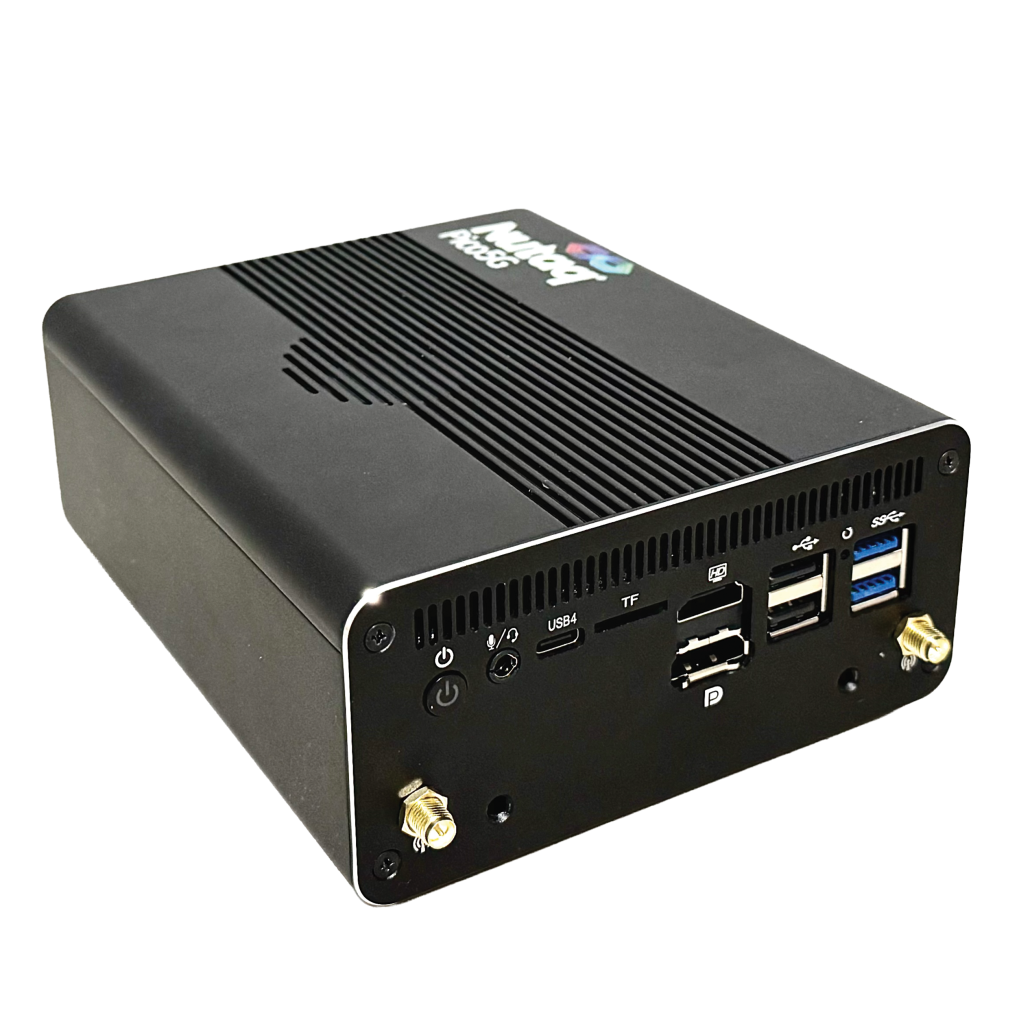
A light-weight, fully portable platform for core 4G/5G device testing, ideal for tight budgets.
Emulate thousands of User Equipment (UE) to test, validate and optimize LTE and 5G networks in lab or field environments with the Amari Simbox.

Put our engineers and the Pico5G platform to work for you — validating your cellular devices faster, at a fraction of the cost of building your own testing capability.
Frequently Asked Questions
The Pico5G Ultra is the highest-capacity platform in the Pico5G Series from Nutaq Technologies Inc. It features four PCIe 4x4 SDR cards, providing up to eight independent 100 MHz RF channels and up to 6 Gbps downlink. It supports 5G SA and NSA, LTE, LTE-M, NB-IoT, NTN, and optional dual FR2 mmWave, and includes a built-in monitor and keyboard. It is 3GPP Release 19 compliant.
The Ultra doubles the SDR card count of the Pro (four vs. two), providing up to eight independent RF channels (vs. four), a higher software license cap of 1,600 MHz (vs. 800 MHz), a 32-core processor (vs. 16-core), and support for up to two FR2 mmWave cells (vs. one on the Pro). The Ultra also supports 6 Gbps downlink vs. 4 Gbps on the Pro.
The Pico5G Ultra supports up to 6 Gbps in the downlink and 2 Gbps in the uplink.
Yes, with an optional hardware package. The FR2 package enables up to two FR2 cells at 100 MHz 2x2 each. Two frequency ranges are available: 24–30 GHz and 37–40 GHz.
The Pico5G Ultra integrates four PCIe 4x4 SDR cards, each supporting two independent 100 MHz 2x2/SISO channels or one 100 MHz 4x4 channel. This provides up to eight 2x2 or four 4x4 channels. The software license caps the total bandwidth multiplied by MIMO layers at 1,600 MHz. A maximum of two FR2 cells (100 MHz 2x2 each) are permitted with the optional mmWave package.
The Pico5G Ultra supports a high number of concurrent cells subject to the 1,600 MHz license cap. Example configurations include: 8 FR1 cells at 100 MHz 2x2, or 4 FR1 cells at 100 MHz 4x4, or combined FR1 and FR2 configurations with the optional mmWave package.
The Pico5G Ultra supports up to 1,000 concurrent active UEs.
Yes. The Pico5G Ultra supports NR-NTN and NB-IoT-NTN across all orbit types (GEO, MEO, LEO), with integrated delay and Doppler channel simulation.
Yes. The Pico5G Ultra includes an integrated monitor and keyboard in the chassis for fully portable, self-contained operation.
The Pico5G Ultra is designed for testing labs, R&D teams, and device certification facilities requiring the highest cell density, RF channel count, and throughput available in a portable platform. It is ideal for multi-cell 5G FR1 scenarios, carrier aggregation across many cells, simultaneous FR1 and FR2 testing, and large-scale device-under-test scenarios.