
LTE & 5G Testing for Medical Devices
Designed for validating cellular connectivity in regulated environments.
Cellular Testing Solutions for Medical Devices
Medical devices increasingly rely on LTE and 5G connectivity for data transmission, remote monitoring, diagnostics, and system integration. For medical device OEMs, validating cellular behavior early is essential—not only for performance, but for reliability, repeatability, and regulatory confidence. Our cellular testing solutions help medical device manufacturers validate connected devices in controlled lab environments in realistic environments, reducing risk before products progress toward certification and deployment.
Built for the Realities of Medical Device Development
Validate Connectivity Early
Pico5G enables OEMs to test cellular modules, embedded devices, and system integrations against a fully configurable LTE and 5G network that mirrors real-world conditions during early R&D—before designs are locked or external dependencies are introduced.
Traceable and Repeatable Testing
Controlled network configurations enable consistent test scenarios, supporting internal verification workflows and documentation requirements common in regulated product development.
Solution Designed for Medical Device Testing
Connected diagnostic and monitoring systems
Remote data transmission validation
Device firmware and software update testing
Cellular performance evaluation under controlled conditions
Pre-certification and internal verification testing
Customized Testing in Real-World Conditions

The Pico5G provides a complete, standards-based LTE and 5G network in a compact lab platform, allowing medical device manufacturers to evaluate connectivity behavior with precision and repeatability.
Ideal for:
Cellular-enabled medical device validation
Embedded modem and gateway testing
System integration and regression testing
Proof-of-concept development and troubleshooting
Validate Connectivity With Confidence
The Pico5G is designed to support medical device OEMs during development and validation, helping teams understand and control cellular behavior before products advance toward certification and deployment.
Related Content

Emulate thousands of User Equipment (UE) to test, validate and optimize LTE and 5G networks in lab or field environments with the Amari Simbox.
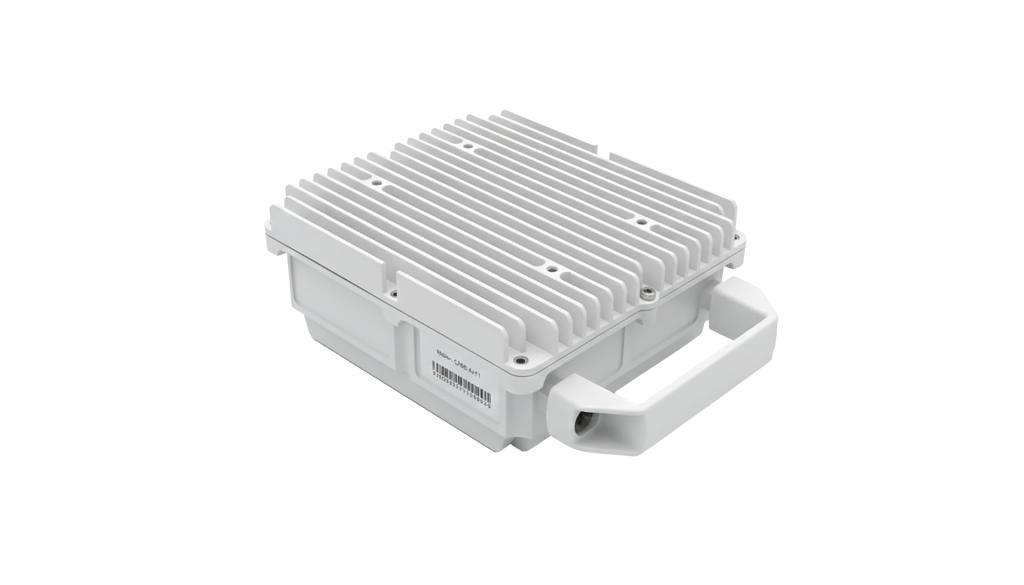
Accelerates enterprise and industrial private network deployments with simplicity, flexibility, and carrier-grade performance.
A full Walkthrough for measuring the PSM Power Profile of the Skyworks SKY66430 NB-IoT and CaT-M1 device.
Frequently Asked Questions
Connected medical devices must perform reliably in environments where connectivity conditions are highly variable. A connectivity failure in a monitoring device can delay a critical alert; a failed OTA update can leave a device running outdated software at a point of care. For regulated devices, connectivity failures can also trigger regulatory reporting obligations or delay certification submissions. Regulatory frameworks including ISO 134852 and IEC 623041 require that device behaviour be validated under documented, reproducible conditions — which live carrier networks cannot provide.
LTE-M (CAT-M1) and NB-IoT are the most widely deployed standards for wearable and remote monitoring devices because of their low power consumption, long battery life, and deep indoor coverage. Standard LTE is used for higher-bandwidth clinical devices such as imaging equipment and connected infusion systems. 5G NR is emerging for high-resolution remote diagnostics and robotic surgery assistance. The Pico5G supports all of these standards.
IEC 62304 requires structured software lifecycle processes including verification and validation with traceable documentation.1 ISO 13485 requires that all processes producing outputs for regulated devices be validated under reproducible conditions.2 IEC 62304 compliance is a mandatory requirement for FDA 510(k) submissions and EU MDR/IVDR CE Marking.3 A lab-based cellular test environment allows teams to define specific network states, execute structured test scenarios, and generate consistent, traceable results that support Design Verification (DV) and Validation (VAL) documentation.
Graceful degradation refers to a device's ability to maintain safe and appropriate behaviour when its cellular connection is lost or degraded — for example, continuing to store data locally during a connectivity gap, alerting the user appropriately, and resuming transmission reliably when coverage is restored. For patient monitoring devices, failure to degrade gracefully can mean missed alerts or incorrect device state reporting. Testing graceful degradation in the lab — by simulating signal loss, packet loss, connection timeout, and network outage scenarios — is a critical part of any connected medical device validation programme, and is directly relevant to IEC 62304 risk-based testing requirements.1
The Pico5G Series is used to validate remote patient monitoring devices and wearables with LTE-M or NB-IoT connectivity, diagnostic instruments with cellular data transmission, connected infusion and drug delivery systems, hospital-grade tablets and clinical communication terminals, medical gateway hardware and embedded cellular modules, and OTA update mechanisms for regulated devices. Any device that transmits, receives, or synchronises data over LTE or 5G in a clinical or remote care setting can be evaluated with the Pico5G Series.
No. The Pico5G Series operates as a fully self-contained eNodeB/gNodeB and EPC/5GC — it creates its own private cellular network and does not require a carrier SIM, carrier agreement, spectrum licence, or internet connection. This is important for medical device development, where prototype devices are typically not authorised for transmission on licensed public spectrum, and where network isolation is preferred for security and regulatory documentation purposes. Pre-programmed SIM cards registered to the local network are included with each unit.
The Pico5G Series includes built-in battery life analysis capabilities. Parameters such as PSM (Power Saving Mode) and eDRX (Extended Discontinuous Reception), introduced in 3GPP Release 134 and refined through Release 19, can be configured and varied to characterise their impact on device power draw. 3GPP specifies a target battery lifetime of more than 10 years for IoT devices in defined deployment scenarios;4 meeting that target in real-world conditions depends on correct PSM and eDRX configuration, which the Pico5G enables engineers to validate systematically.
Yes. The PicoNet is a field-deployable private LTE/5G small cell solution that can provide dedicated cellular coverage within a hospital ward, clinic, research facility, or care home. A private network in a clinical environment allows medical device connectivity to operate independently of the public cellular network — important where carrier coverage inside buildings is poor, where IT security policy requires traffic isolation, or where a controlled network environment is needed for clinical trial data integrity. Contact Nutaq to discuss coverage and deployment requirements for your specific facility type.
Hospital Wi-Fi environments are typically dense, heavily managed, and subject to interference from the wide range of wireless devices in clinical use. Cellular technologies such as LTE-M and NB-IoT operate on licensed spectrum, offering better penetration through walls and floors, more predictable performance at range, and lower power consumption for battery-operated devices. A private cellular network also provides the operator with control over QoS, security policy, and device authentication.
Yes. Nutaq's Testing as a Service (TaaS) option allows Nutaq engineers to conduct cellular connectivity testing using Pico5G Series equipment on the customer's behalf, or set up remote testing access to Pico5G Series equipment. This is particularly useful for small OEM teams, single-product programmes, or pre-submission validation efforts where the testing requirement is time-bounded and does not justify a capital investment in dedicated equipment. Contact Nutaq or visit nutaq.com/taas for more information.
Citations
- International Electrotechnical Commission, IEC 62304:2006+Amd1:2015 — Medical device software — Software life cycle processes. Compliance with IEC 62304 is a mandatory requirement for FDA 510(k) submissions and EU MDR/IVDR CE Marking technical documentation. https://www.iec.ch/homepage
- International Organization for Standardization, ISO 13485:2016 — Medical devices — Quality management systems — Requirements for regulatory purposes. Requires documented, reproducible validation of all processes and outputs, including software and connectivity behaviour. https://www.iso.org/standard/59752.html
- Qualio, “Ultimate Guide to the IEC 62304 Standard,” May 2025. “IEC 62304 compliance should naturally form a key part of your overarching ISO 13485 quality and compliance processes.” https://www.qualio.com/blog/iec-62304
- 3GPP Technical Specification Group RAN, 3GPP Release 13 — specification of PSM (Power Saving Mode) and eDRX (Extended Discontinuous Reception) for NB-IoT and LTE-M. 3GPP requires a battery lifetime of more than 10 years with a battery capacity of 5 Wh for IoT devices in defined deployment scenarios. https://www.3gpp.org/release-13
- Spenza, “NB-IoT vs LTE-M vs 5G RedCap: IoT Connectivity Guide (2026),” April 2026. “Real-world smart meter deployments routinely achieve 10+ years on a single battery” using PSM and eDRX. LTE-M battery life typically 5–7 years. https://spenza.com/esim/nb-iot-vs-lte-m-vs-5g-redcap/