
Get Professional Cellular Testing Without the Complexity
Building an in-house cellular device testing capability takes significant time, capital, and specialized expertise. Nutaq TaaS removes every one of those barriers.
Lower Cost
Skip purchasing expensive testing equipment. Access the same professional-grade testing capability as a flexible service.
Faster Results
No procurement delays, receiving, installation, or ramp-up time. Nutaq’s engineers are already set up and ready to test.
Expert Engineers
No need to recruit, interview, onboard, or train specialized RF and cellular testing engineers. Nutaq’s team brings deep 4G/5G protocol expertise to every engagement.
Confidential
Protecting your intellectual property and development data is a core part of our Testing as a Service (TaaS) process.
AI-Assisted Depth
Using the Pico5G Copilot, diagnoses arrive with cited evidence traces, accelerating root-cause work on your device’s toughest issues.
Powered Precision
Every test is conducted on advanced platform, emulating real-world network conditions — cell handover, packet loss, roaming, and more.
Iterative or One-Time
TaaS can fit your development cycle. Run a one-time validation before launch, or engage iteratively as your firmware and hardware evolve.
Detailed Written Report
Every TaaS engagement concludes with a comprehensive written report covering test results, analysis, and actionable findings.
Satellite-Ready
For satellite projects, we fly designed LEO/MEO/GEO passes, test ephemeris re-sync and coverage windows, and measure GNSS-error tolerance — on the bench.
From Initial Scope to Final Results
A straightforward, collaborative process designed to get you trusted results with minimal disruption to your team. We work with you to tailor testing and services to meet your unique needs.
Step 1
Discovery & Scoping
We work with you to define your requirements, the scope, and the specific test cases that matter most for your project and industry.
Step 2
Test Plan Design
Our engineers design a tailored test plan to emulate your target network conditions and selecting the appropriate scenarios and measurements.
Step 3
Testing
We run tests using the Pico5G and supporting equipment. Tests cover the agreed scope.
Step 4
Analysis & Iteration
Results are analyzed by our engineers. Findings are shared as your development cycle progresses, enabling rapid corrective action.
Step 5
Final Report Delivery
You receive a written report covering methodology, detailed results, pass/fail outcomes, observed anomalies, and recommendations for your team.
Send Us Your Project Details to Get Started
Confidentiality & IP Protection
we understand that many IoT and wireless projects involve proprietary hardware, unreleased products, sensitive firmware, and confidential network configurations. Protecting your intellectual property and development data is a core part of our Testing as a Service (TaaS) process.
We work closely with each client under strict confidentiality practices and can support Non-Disclosure Agreements (NDAs) as required. All testing environments, device configurations, logs, and performance results are handled securely and shared only with authorized stakeholders.
Whether you are validating a prototype, preparing for certification, or troubleshooting deployment issues, our team ensures your technology remains protected throughout the entire testing lifecycle.
Customizable Testing Scenarios and Cases
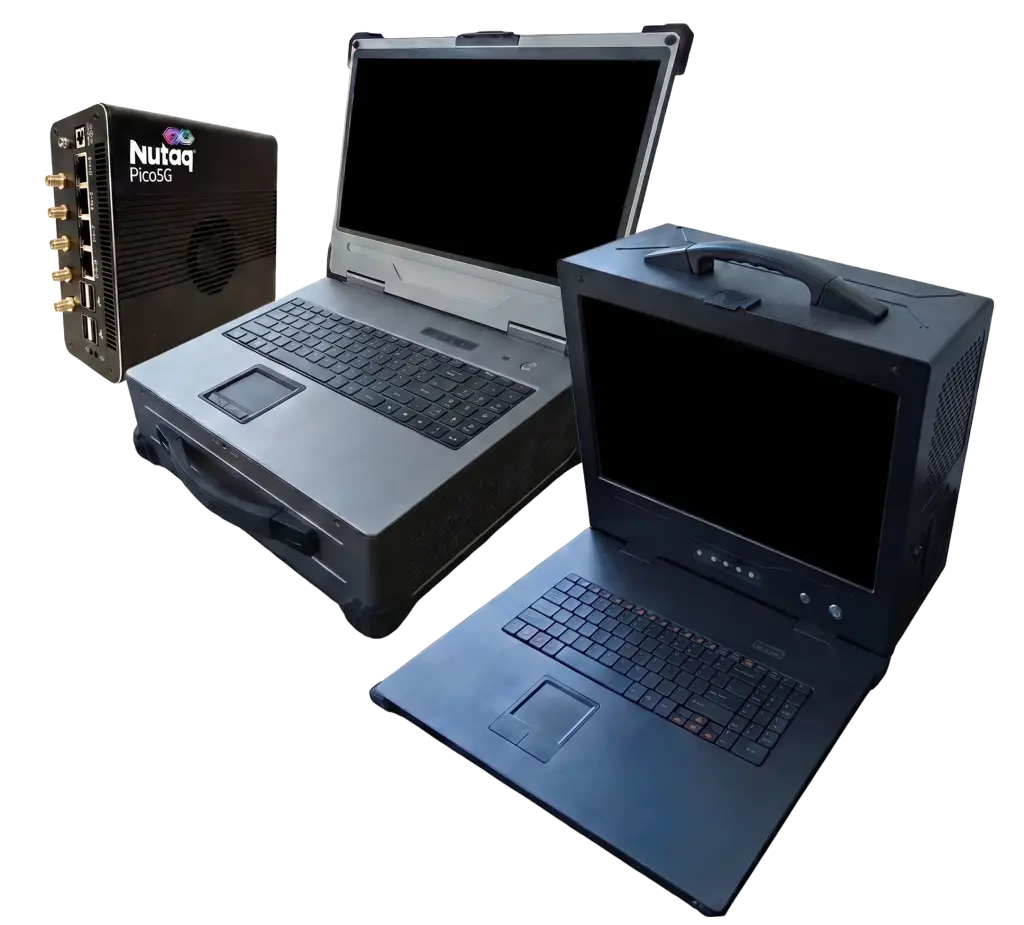
The Pico5G Series comes preloaded with various preconfigured and customizable test cases and scenarios so you can start testing faster. Budget friendly options are available.
Related Content
Emulate thousands of User Equipment (UE) to test, validate and optimize LTE and 5G networks in lab or field environments with the Amari Simbox.
Tailored for the comprehensive testing of 5G NSA and SA, LTE, LTE-M, and NB-IoT devices.
A full Walkthrough for measuring the PSM Power Profile of the Skyworks SKY66430 NB-IoT and CaT-M1 device.
This article examines seven critical IoT device testing mistakes that RF engineers and device manufacturers must address before deployment.
Frequently Asked Questions
Nutaq's Testing as a Service (TaaS) is a professional cellular device testing service in which Nutaq provides the platform, expertise, and engineering resources to validate your LTE, LTE-M, NB-IoT, or 5G devices under controlled, real-world network conditions — without you needing to purchase testing equipment or employ specialized RF engineers. TaaS is available in two delivery models: Nutaq engineers conduct testing on your behalf, or you ship your device to Nutaq and connect remotely to run tests yourself using Nutaq's Pico5G Series infrastructure. Every engagement is scoped collaboratively and concludes with a written report.
Yes. Engagements can include designed satellite passes across LEO/MEO/GEO with physically applied delay and Doppler, ephemeris re-sync timing, coverage-window behaviour, and GNSS-error tolerance sweeps — each with pass/fail verdicts in the report.
Our engineers use the Pico5G Copilot's cited-evidence diagnostics as part of root-cause work during engagements. Findings in your report are always verified by our team; the AI's evidence traces make that verification faster and more transparent.
No. Questions and the tool results the diagnosis gathers are all bench test data, no personal data included. With a local/LAN model, nothing leaves the unit, so everything stays securely with Nutaq.
TaaS is designed for any team that needs professional cellular device testing but faces constraints around equipment, expertise, or time. This includes: hardware startups and IoT OEMs validating a first cellular-connected product; established device manufacturers needing surge testing capacity at key milestones; medical device companies requiring structured, documented test results to support regulatory submissions; automotive and telematics suppliers validating TCUs or modules on a project basis; and any development team that wants to de-risk a connectivity issue quickly without building permanent in-house test infrastructure.
The three most common reasons are cost, speed, and expertise. Purchasing a professional-grade cellular test platform such as a Pico5G Series product (especially more powerful models), staffing RF engineers to operate it, and establishing internal test processes represent a significant capital and operational investment. TaaS converts that into a flexible, per-engagement service cost. It also eliminates procurement lead times, installation, and ramp-up — Nutaq's engineers are already set up and ready. For teams that need results within a development sprint or before a certification submission deadline, the speed advantage is often the deciding factor.
Both. TaaS is designed to fit any point in the development cycle. A one-time engagement is common for pre-launch validation, a specific certification milestone, or resolving a field connectivity issue under controlled conditions. Iterative engagements — running tests across multiple firmware builds, hardware revisions, or software update cycles — are equally supported. Nutaq works with each client to define the engagement structure that best matches their project timeline.
Nutaq TaaS is available in two delivery models. In the first model, Nutaq engineers conduct all testing on your behalf: your device is connected to a Pico5G platform at Nutaq's facility, our team runs the agreed test scenarios, and you receive a comprehensive written report. In the second model, you ship your device to Nutaq, we connect it to a Pico5G platform and configure the test environment, and then set up secure remote access so your own engineers can run tests directly from your location — with Nutaq support available throughout. Both models follow the same collaborative scoping and reporting process, and both include a final written report.
This model is the right choice when you want to minimize internal resource allocation, when you don't have RF or cellular testing expertise in-house, or when you need reproducible test results with professional documentation — for example, to support a regulatory submission or a customer audit. It is also well suited to one-time validation engagements where you want a trusted, independent assessment of device connectivity performance.
The remote access model is the right choice when your engineering team wants hands-on control of the test execution — running specific scenarios, adjusting parameters in real time, and exploring edge cases as they emerge — but does not have access to a Pico5G platform of their own. It is also well suited to teams with proprietary test scripts, internal test frameworks, or specific test methodologies that they want to apply directly rather than describing to a third party. Nutaq configures the device and platform, provides remote access credentials, and remains available for technical support throughout.
Yes. There is no commitment to a single model. Some clients start with Nutaq-run testing to establish a baseline and generate the initial documentation, then move to the remote access model for subsequent firmware iterations where their engineers want direct control of the test execution. Others do the opposite — they use remote access to run exploratory testing internally, then commission a Nutaq-run engagement for the formal pre-certification validation. Nutaq will work with you to determine the most effective structure for each phase of your project.
A TaaS engagement follows five stages.
- Discovery and scoping: Nutaq works with your team to define requirements, establish the scope, and agree on the specific test cases and scenarios relevant to your device and target deployment environment.
- Test plan design: Nutaq engineers design a tailored test plan that emulates your target network conditions, selecting appropriate configurations and measurements.
- Testing: Tests are run using a Pico5G platform and any supporting equipment. In the remote access model, your engineers run tests under Nutaq's technical support.
- Analysis and iteration: Results are analysed as testing progresses, and findings are shared in a timely way to support rapid corrective action within your development cycle.
- Final report: You receive a written report covering methodology, detailed results, pass/fail outcomes, observed anomalies, and recommendations.
Engagement duration depends on the number of test scenarios, the complexity of the device under test, the protocol scope (LTE, 5G SA, multi-band configurations, etc.), and how much iteration is required. A focused, single-scenario validation engagement can be completed in a few days. A broader multi-scenario programme covering functional testing, performance characterisation, and failure mode validation across multiple firmware builds may span several weeks. Nutaq discusses timeline expectations during the scoping phase, before work begins.
The final written report covers: the agreed test methodology and scope; the specific test scenarios and network configurations used; detailed results for each test case, including pass/fail outcomes; observed anomalies and their conditions of occurrence; analysis and interpretation of results; and actionable recommendations for your engineering team. For clients using TaaS to support regulatory submissions or customer documentation, the report is structured to provide a clear, traceable record of test execution and outcomes.
The test plan is built around your device's target deployment environment, the cellular protocols and bands it uses, the specific failure modes you are most concerned about, and your project's objectives — whether that is pre-certification validation, field issue reproduction, performance benchmarking, or regulatory documentation. The scoping conversation is collaborative, and Nutaq draws on experience across a wide range of device types and industries to recommend scenarios that are both relevant and efficient within your engagement budget.
TaaS supports testing across all protocols supported by the Pico5G platform: LTE, LTE-M (CAT-M1), NB-IoT (NB1 and NB2), 5G SA (Standalone), 5G NSA (Non-Standalone), and NR-NTN/NB-IoT-NTN for satellite-connected devices. This covers functional and performance testing across FDD and TDD frequency configurations. If your device supports multiple cellular technologies — for example, a module that falls back from LTE to NB-IoT — multi-mode testing is supported within the same engagement.
Common scenarios include: device attach and detach behaviour; data session establishment, throughput, and latency measurement; cell handover and network transition behaviour (e.g., LTE to 5G); packet loss and degraded signal performance; power consumption and battery life profiling under PSM and eDRX configurations; reconnection behaviour after coverage loss; OTA (over-the-air) software update delivery and success/failure handling; VoLTE, VoNR, and VoWiFi call setup and quality; and protocol-level interoperability against the Pico5G core network stack. The scenarios included in any given engagement are agreed during scoping and depend on your device type, target deployment environment, and project objectives.
Yes. Reproducing field-reported connectivity issues under controlled lab conditions is one of the most valuable applications of TaaS. Nutaq engineers work with your team to characterise the conditions under which the issue occurs — signal level, network configuration, device state, traffic pattern — then configure a Pico5G platform to replicate those conditions precisely. Once the issue is reproducible, systematic parameter variation can isolate the root cause, significantly accelerating the path to a firmware or configuration fix.
Yes. Battery life analysis and power consumption profiling are supported within TaaS engagements. Nutaq engineers can configure PSM (Power Saving Mode) and eDRX (Extended Discontinuous Reception) parameters on a Pico5G paltform and measure the resulting current draw and discharge behaviour on your device. This is particularly relevant for LTE-M and NB-IoT devices where battery longevity is a key design requirement and must be validated before deployment at scale.
Protecting client IP and development data is a core part of Nutaq's TaaS process. Nutaq operates under strict confidentiality practices and supports Non-Disclosure Agreements (NDAs) as required. All testing environments, device configurations, firmware images, communication logs, and test results are handled securely and shared only with authorised stakeholders. Nutaq has experience working with prototype hardware, pre-release firmware, and confidential product roadmaps across a range of industries.
Nutaq can put an NDA in place before any confidential information is shared, including during the scoping conversation. If your organisation requires an NDA as a precondition to disclosing device specifications, firmware details, or other proprietary information, please flag this when you first make contact and Nutaq will arrange the appropriate agreement before the scoping process begins.
Your device is returned to you at the conclusion of the engagement, or at any earlier point you request. All test data, logs, configuration files, and device firmware handled during the engagement are retained only as long as necessary to complete and document the work. Specific data retention and destruction requirements can be agreed as part of the engagement terms. Nutaq's team discusses these requirements with each client during the scoping phase.
No. The entire point of TaaS is that you do not need to own a Pico5G platform, employ RF testing engineers, or have any cellular testing infrastructure in place. You provide the device under test; Nutaq provides everything else — platform, expertise, test environment, and reporting. If you choose the remote access delivery model, you will need a stable internet connection for the remote session, but no specialised software or hardware beyond what your engineering team already uses.
Yes. TaaS is frequently used by teams with strong hardware or RF backgrounds who are encountering cellular protocol behaviour for the first time — for example, a hardware company building its first LTE-M connected product, or an embedded firmware team unfamiliar with how 5G SA core network signalling interacts with their device. Nutaq's engineers bring deep 4G and 5G protocol expertise to every engagement, and the scoping and reporting process is designed to be informative regardless of your team's existing cellular knowledge.
Yes. TaaS is well suited to supporting pre-submission validation for regulatory programmes including those governed by ISO 13485 and IEC 62304 for medical devices, UNECE R155/R156 for automotive OTA processes, and carrier or PTCRB certification programmes for cellular modules. Nutaq structures the test methodology, execution, and final report to provide clear, traceable documentation of what was tested, under what conditions, and with what outcomes. Requirements vary by jurisdiction and certification body — Nutaq recommends discussing your specific submission requirements during the scoping phase.
TaaS is useful at any stage of development, including early prototypes. In fact, some of the highest-value engagements are at the prototype stage, when connectivity issues are least expensive to fix. Whether your device is a development board, an engineering sample, a near-final prototype, or production-equivalent hardware, Nutaq's team will tailor the test scope to what is appropriate for that stage of development. For early-stage devices, the engagement often focuses on identifying connectivity issues and informing design decisions, rather than formal pass/fail validation.
Contact Nutaq at nutaq.com/contact-us. The first step is a discovery conversation in which Nutaq's team learns about your device, your target protocols and deployment environment, your project timeline, and your specific testing objectives. From there, Nutaq will propose a scope and approach, which is refined collaboratively before work begins. There is no commitment required before the scoping conversation.
TaaS engagements are scoped and priced on a project basis, reflecting the protocols under test, the number and complexity of scenarios, the delivery model chosen, and the level of reporting required. Budget-friendly options are available. Nutaq discusses pricing transparently during the scoping phase so there are no surprises. Contact Nutaq at nutaq.com/contact-us to request a quote.
Yes. TaaS is available to clients internationally. You ship your device to Nutaq's facility; most standard shipping carriers can accommodate this, and Nutaq can advise on recommended procedures for shipping prototype hardware internationally.
Scope changes are a normal part of device development projects, and Nutaq's TaaS process is designed to accommodate them. If you discover a new issue during testing, want to add scenarios, or need to adjust the focus of the engagement, Nutaq will discuss the impact on timeline and cost transparently and revise the scope accordingly. The iterative nature of TaaS — where findings are shared during the engagement rather than only at the end — is specifically designed to surface these inflection points early enough to act on them.