
Testing and Private Networks for Oil and Gas
Designed for testing, validating, and deploying cellular networks in harsh environments.
Cellular Connectivity Solutions for Oil and Gas
Oil and gas operations increasingly rely on connected devices, remote monitoring, and real-time data — but deploying wireless connectivity in isolated and hazardous environments carries significant risk. Our solutions help operators, service companies, and system integrators test devices, de-risk deployments, and deploy reliable private cellular networks across upstream, midstream, and downstream oil and gas facilities.
Built for the Realities of Oil and Gas Operations
Reduce Operational Costs and Safety Risks
The compact and portable Pico5G enables lab-based testing of cellular-enabled sensors, gateways, and industrial devices against realistic, real-world conditions, allowing teams to identify issues before equipment is deployed. By testing and validating connectivity in advance, oil and gas teams can minimize unexpected failures, reduce site visits, and improve confidence in mission-critical communications.
Keep Teams and Equipment Connected
The PicoNet supports on-site pilots and operational private LTE and 5G networks, both indoor and outdoor, enabling operators to evaluate coverage, performance, and reliability under real field conditions without relying on public infrastructure. This allows teams and equipment to remain connected to each other and head office at all time.
Connecting Nearly All Areas of Oil and Gas
Remote monitoring and control of field assets
Industrial IoT (IIoT) sensor connectivity
Worker safety and situational awareness systems
Predictive maintenance and condition monitoring
Temporary connectivity for exploration and construction
Solutions Designed for Oil and Gas
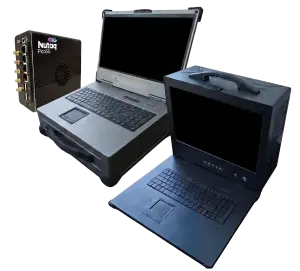
Pico5G provides a complete, standards-based LTE and 5G network in a compact lab platform, enabling repeatable and controlled testing before deployment to the field.
Ideal for:
Industrial IoT device and gateway testing
Validation of cellular-enabled field equipment
Network performance and behavior testing
Proof-of-concept development
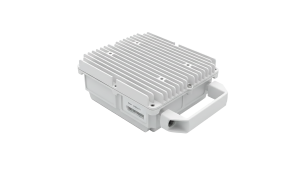
PicoNet delivers local, controlled cellular coverage tailored to oil and gas environments, supporting reliable connectivity where public networks are unavailable or unsuitable.
Ideal for:
Production facilities and processing plants
Remote well sites and pipelines
Temporary or mobile installations
Pilot and operational private cellular networks
Deploy Private Cellular Networks With Confidence
From early device testing to private LTE and 5G deployment at remote sites, achieve connectivity across the full oil and gas lifecycle — helping teams improve reliability while reducing operational risk.
Related Content

Emulate thousands of User Equipment (UE) to test, validate and optimize LTE and 5G networks in lab or field environments with the Amari Simbox.

Put our engineers and the Pico5G platform to work for you — validating your cellular devices faster, at a fraction of the cost of building your own testing capability.
A full Walkthrough for measuring the PSM Power Profile of the Skyworks SKY66430 NB-IoT and CaT-M1 device.
Understand seven critical IoT device testing mistakes that RF engineers and device manufacturers must address before deployment.
Frequently Asked Questions
Oil and gas operations depend on wireless communications for worker safety systems, remote monitoring of wellheads and pipelines, emergency shutdown (ESD) and alarm transmission, and coordination of field crews across geographically dispersed assets. In upstream and midstream environments, public cellular coverage is frequently absent or unreliable. A dropped connection in these contexts is not an inconvenience — it can delay a safety-critical response, interrupt monitoring of high-pressure equipment, or leave remote workers without situational awareness.
Key challenges include: physical remoteness placing sites beyond public cellular coverage; hazardous area (ATEX/IECEx/NEC Division) classifications that constrain which wireless equipment can be used; extreme environmental conditions including temperature range, humidity, dust, and vibration; large site footprints requiring coverage across dispersed wellheads, pipelines, and processing equipment; cybersecurity requirements under IEC 624431 that restrict OT connectivity to public networks; and the need to support a mix of low-bandwidth sensor telemetry, high-bandwidth video, and voice communications on the same infrastructure.
TETRA is well-established for voice and narrow-band data but lacks the bandwidth for modern IIoT and video applications. Wi-Fi has range and mobility limitations in large outdoor sites. Satellite connectivity — particularly geostationary — carries significant latency, limited bandwidth, and external infrastructure dependency that makes it unsuitable for real-time control. Private LTE/5G offers licensed-spectrum reliability, broad coverage with fewer nodes, low latency suitable for real-time monitoring and control, and full operational control. Aker BP, Equinor, and other oil and gas operators are among the industrial organisations now deploying private cellular networks.2,3
LTE-M (CAT-M1) and NB-IoT are the dominant cellular IoT standards for low-power oil and gas field instrumentation — including flow meters, pressure transmitters, tank level sensors, and gas detection devices — because of their low power consumption, long range, and small data payload support. Both standards support PSM and eDRX power-saving features, which can extend device battery life to multiple years in the field.4
The Pico5G Series is used to validate cellular-connected sensors and transmitters for wellhead and pipeline monitoring, flow measurement and custody transfer gateways, gas detection and safety shutdown device communications, SCADA endpoints with cellular backhaul, field worker communication terminals and wearables, remote terminal units (RTUs), portable instruments used during commissioning, and emergency response communication hardware. Any device intended for LTE, LTE-M, NB-IoT, or 5G NR operation in the field can be tested against a controlled network in the lab before deployment.
Deploying untested cellular devices to remote or hazardous sites introduces significant cost risk. The Pico5G Series enables teams to identify and resolve connectivity issues — including edge cases like low-power mode reconnection, signal handover behaviour, and failure modes under degraded coverage — in the lab, where changes are fast and inexpensive, before any hardware goes to the field.
The PicoNet is a private LTE/5G small cell solution that integrates radio and core network functionality in a single unit, designed for deployment in environments where public cellular coverage is unavailable or unsuitable. For oil and gas, this includes remote well sites, pipeline monitoring stations, processing plants, offshore platforms, and exploration camps.3 The PicoNet delivers up to 50 MHz bandwidth with 2×2 MIMO and up to 2×10 W transmit power for robust outdoor coverage, supports LTE and 5G NR across a broad range of frequency bands, and runs on Ubuntu OS for edge application deployment. It supports custom frequency configurations to suit local spectrum availability.
Yes. The PicoNet is designed for rapid, flexible deployment — including temporary, mobile, and relocatable configurations. For exploration drilling programmes, pipeline construction corridors, and commissioning activities, the PicoNet can be established quickly to provide communications coverage, then relocated or decommissioned as the project moves forward.
A private PicoNet deployment keeps all network traffic within the operator's own infrastructure — enabling strict access control, traffic segmentation between OT and IT systems, and audit of all device communications. This is directly relevant to the ISA/IEC 62443 framework for industrial cybersecurity,1 which covers oil and gas pipeline and production facilities and provides structured guidance for securing operational technology environments — including requirements for network segmentation, access control, and maintaining the integrity and availability of critical systems.
A low-risk approach begins in the lab: use a Pico5G model to validate the specific devices and sensors planned for the deployment against a controlled LTE/5G network. Once devices are validated, deploy a PicoNet pilot at a single site — a well pad, a compressor station, or a section of pipeline — and measure real-world performance against your operational requirements. Expand to additional sites based on validated results. Nutaq can support each stage with configuration guidance, onsite support, and training. Contact Nutaq for more information.
Citations
- ISA/IEC 62443 — Security for industrial automation and control systems (IACS). The standard covers all industries that use IACS, including oil and gas pipeline and production and distribution facilities. International Society of Automation (ISA). https://www.isa.org/standards-and-publications/isa-standards/isa-iec-62443-series-of-standards
- SNS Telecom & IT / ResearchAndMarkets, “Private 5G Market: 2025–2030.” Lists Aker BP, Equinor, and other oil and gas operators among industrial adopters of private 5G. LTE and 5G private networks are established in offshore oil and gas environments. https://www.researchandmarkets.com/reports/6161605/private-5g-market-opportunities-challenges
- GSA, “Private Mobile Networks June 2025.” Notes private mobile network installations in offshore locations serving the oil and gas industries. https://gsacom.com/paper/private-mobile-networks-june-2025/
- Spenza, “NB-IoT vs LTE-M: Which Is Right for You?” February 2026. Covers PSM and eDRX power-saving behaviour for low-power field instrumentation. https://spenza.com/esim/nb-iot-vs-lte-m-comparison/