
LTE and 5G Testing for Automotive
Validate connectivity before vehicles hit the road.
Cellular Testing Solutions for Automotive
Connected vehicles increasingly rely on LTE and 5G connectivity for telematics, diagnostics, fleet management, and emerging mobility applications. Our cellular IoT device testing solutions help automotive OEMs, Tier-1 suppliers, and technology providers validate devices, de-risk integration, and accelerate development of connected vehicle systems—before deployment at scale.
Built For the Realities of Automotive Development
Accelerate Development and Validation Cycles
The Pico5G enables lab-based testing of cellular modules, telematics control units (TCUs), and gateways against realistic network conditions long before vehicles enter production or field trials.
Support Long-term Product Reliability
Consistent, repeatable testing helps automotive teams ensure connectivity behavior remains stable across software updates, hardware revisions, and product generations.
Designed for Automotive Applications
Connected vehicle and telematics validation
Over-the-air (OTA) update testing
Fleet connectivity and diagnostics development
Cellular performance evaluation across LTE and 5G
Pre-production and regression testing workflows
Customized Testing in Real-World Conditions

The Pico5G Series of products provide a complete, standards-based LTE and 5G network in a compact completely portable platform, enabling automotive teams to test devices and systems under realistic network conditions — without exposing vehicles or prototypes to uncontrolled environments. Validate how your TCU handles handover between LTE bands during highway driving — without leaving the lab.
Ideal for:
Telematics control unit (TCU) testing
Cellular modem and antenna validation
Firmware and software regression testing
Proof-of-concept development for connected vehicle features
Designed for Validating Connected Vehicle Technologies
Our solutions are designed to support automotive connectivity from early development through validation, helping teams deliver reliable, connected vehicle technologies with confidence.
Related Content

Our solutions help manufacturers, automation vendors, and system integrators test devices, de-risk deployments, and build reliable private LTE and 5G networks for factory floors and industrial sites.
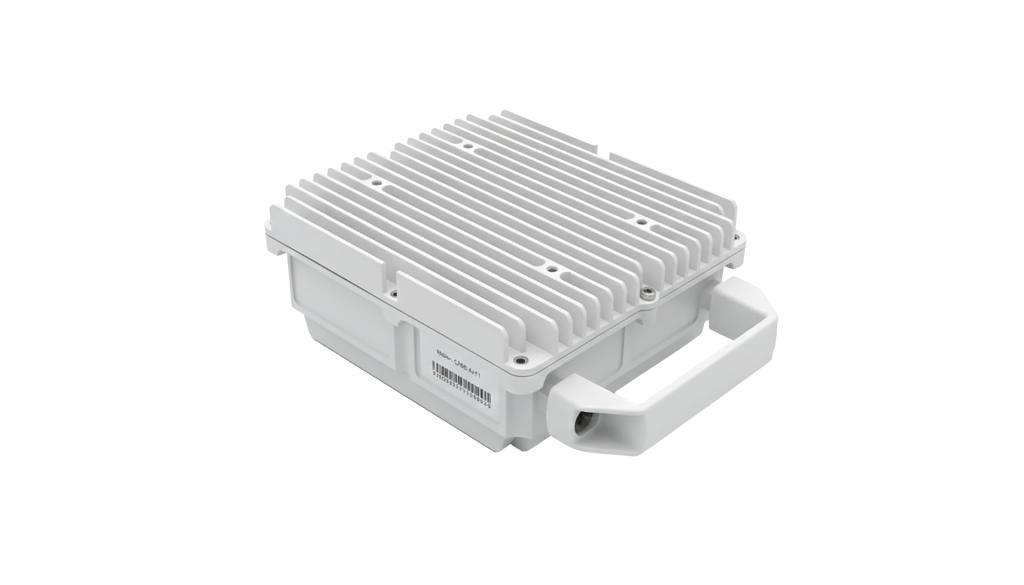
The PicoNet accelerates enterprise and industrial private network deployments with simplicity, flexibility, and carrier-grade performance.

Put our engineers and the Pico5G platform to work for you — validating your cellular devices faster, at a fraction of the cost of building your own testing capability.
Full Walkthrough for measuring the PSM Power Profile of the Skyworks SKY66430 NB-IoT and CaT-M1 device.
Frequently Asked Questions
LTE (4G) is the dominant standard for connected vehicle telematics, used for emergency calling, OTA software updates, fleet management, and remote diagnostics. 4 LTE-M and NB-IoT are used for low-bandwidth IoT applications such as asset tracking. 5G NR is beginning to appear in premium vehicles and is expected to become standard as automakers require the bandwidth for high-definition mapping, real-time V2X communication, and high-throughput diagnostic data.4 EU Regulation 2024/1180 now also mandates 4G/5G-compatible eCall in new vehicles as 2G/3G networks are retired.1
Live carrier networks are uncontrolled environments — signal conditions, handover behaviour, and network availability change continuously and cannot be reproduced exactly. For automotive development, this means a defect found on a live network may be impossible to reproduce in the lab or trace to a root cause. Lab-based testing with a controllable network emulator allows engineers to define exact network states, inject specific failure conditions, and run the same test scenario repeatedly against different firmware builds — which is essential for both debugging and regression validation across software update cycles. UNECE Regulation R156, adopted across many markets, also requires documented, controlled software update management processes, further supporting the case for reproducible lab-based testing.3
The most common causes include: inadequate antenna placement leading to poor signal reception; firmware that handles handover or reconnection incorrectly when moving between LTE bands or cells; power management modes (PSM, eDRX) that are misconfigured and prevent timely reconnection; interoperability gaps between the cellular module and the EPC/5GC core; and OTA update logic that fails gracefully under degraded or interrupted connectivity.3,5 Most of these failure modes are identifiable and fixable in a controlled lab environment before the vehicle enters field trials.
Cellular testing is most effective — and most cost-efficient — when introduced during hardware bring-up and firmware integration, before design freeze. OTA update capability is now present in over 70% of new vehicles globally,2 meaning the connectivity stack must be validated not only at launch but across the vehicle's commercial lifetime through software update cycles. A structured test programme using a lab-based network emulator should run continuously from early development through each major software release.
The Pico5G Series is used to validate telematics control units (TCUs), cellular modems and antenna systems, embedded connectivity modules, V2X gateways with cellular backhaul, and fleet management hardware. TCUs in particular are the central communication hub for OTA update delivery and account for approximately 36% of the automotive OTA updates market by application.2 Any component communicating over LTE, LTE-M, NB-IoT, or 5G can be evaluated against a controlled, reproducible network.
Yes. The Pico5G Series supports channel simulation per 3GPP specifications 36.101 and 38.141, allowing engineers to introduce signal degradation, path loss, interference, bandwidth variance, and packet loss that mirror real driving conditions. Cell handover can be simulated — for example, how a TCU handles the transition between LTE bands during highway driving — without a test track or live network.
The Pico5G Lite is a strong starting point for single-module testing of LTE, LTE-M, NB-IoT, and 5G SA in a compact lab setup. The Pico5G Plus adds multi-cell operation and 5G NSA support, important for handover testing and scenarios requiring concurrent NR and LTE cells. The Pro and Ultra are relevant for high-throughput 5G NR validation, testing multiple device variants simultaneously, or requiring 100 MHz channel bandwidth. Contact Nutaq to discuss configuration options.
Yes. The PicoNet is a field-deployable private LTE/5G small cell solution that delivers carrier-grade cellular coverage in environments where public network coverage is absent or unsuitable. For automotive applications, this includes proving grounds requiring controlled network conditions during vehicle trials, manufacturing facilities connecting AGVs and production robots, and fleet yards managing connected vehicle fleets on-site.
A live carrier network at a proving ground is shared, uncontrolled, and subject to interference, congestion, and outage. A PicoNet deployment provides dedicated, configurable cellular coverage under the operator's control: specific signal levels, handover behaviour, and network load can be set and held consistently across test runs and vehicle variants — supporting the reproducible test conditions that UNECE R156 software update validation requires.3
The Pico5G Series is a family of lab-based cellular test platforms used during design, integration, and regression testing — it creates a controlled, fully configurable LTE/5G network for validating device behaviour. The PicoNet is an operational private cellular network solution deployed at proving grounds, manufacturing facilities, or fleet sites where vehicles need real connectivity at scale. Teams typically use a Pico5G platform to validate devices in the lab, then deploy those devices onto a PicoNet for vehicle-level system trials.
Citations
- EU Regulation 2024/1180 of 13 May 2024, updating Regulation 2015/758 on eCall in-vehicle systems, adding requirements for 4G/5G compatibility. Official Journal of the European Union, L, 2024. https://eur-lex.europa.eu/legal-content/EN/TXT/?uri=OJ:L_202401180
- Future Market Insights, “Automotive Over-the-Air (OTA) Updates Market,” August 2025. “Over 70% of new vehicles globally have OTA capabilities.” https://www.futuremarketinsights.com/reports/automotive-over-the-air-ota-updates-market
- KBV Research, “Automotive Telematics: Architecture, Standards & Outlook,” January 2026. Covers UNECE R155/R156 and global adoption of OTA regulation. https://www.kbvresearch.com/blog/automotive-telematics-architecture-standards/
- MarketsandMarkets, “Automotive Telematics Market worth $16.72 billion by 2032,” August 2025. Notes LTE as dominant standard for mainstream OEM telematics with 5G emerging in premium segments. https://www.marketsandmarkets.com/PressReleases/automotive-telematics.asp
- Global Market Insights, “Automotive Over-the-Air Update Hardware Market,” October 2025. Cellular connectivity dominates OTA hardware with 50% market share in 2024; CAGR of 15% projected 2025–2034. https://www.gminsights.com/industry-analysis/automotive-over-the-air-update-hardware-market