
FAQ
Get answers to the most frequently asked questions.
Nutaq Technologies Inc. is Canada-based company specializing in cellular device testing and private 5G/LTE network deployment platforms. We serve engineers and technical teams globally with testing solutions, 5G/LTE network emulators and deployment platforms, and Testing as a Service (TaaS).
Company & Logistics
Nutaq specializes in cellular IoT (Internet of Things) testing products and services as well as private LTE and 5G network deployment. We provide comprehensive and customizable testing and deployment solutions to ensure your cellular IoT devices, systems, and private networks operate optimally from day one.
We work with a diverse range of industries including automotive, healthcare, smart cities, energy, manufacturing, oil and gas, and consumer electronics. Our experience allows us to understand the unique requirements of each sector.
Our services are available globally. We have experience working with companies across North America, Europe, and Asia.
Absolutely. We can work with your development team to identify potential issues early in the process, offering recommendations to improve functionality, security, and performance before final testing begins.
Private Networks & the PicoNet
A private LTE or 5G network is a dedicated cellular network deployed and operated for a single organization — such as a manufacturer, utility, or oil and gas operator — rather than shared with the general public. Unlike public carrier networks, a private network gives you full control over coverage, capacity, security, and configuration. This means your data stays on-site, latency can be minimized, and the network can be optimized for your specific devices and applications without competing for spectrum or bandwidth with public users.
Wi-Fi is well-suited for fixed, indoor environments with moderate device densities, but private LTE and 5G offer several advantages for industrial and enterprise use cases:
- Wider coverage range, including outdoor and hard-to-reach areas
- Better performance for mobile assets like vehicles, robots, and drones
- Lower susceptibility to interference in industrial RF environments
- Native support for mission-critical voice (VoLTE/VoNR) and low-latency services
- More predictable quality of service (QoS) for real-time control and monitoring
For operations where reliability and coverage are non-negotiable — oil fields, factory floors, substations, or large campuses — private cellular is often the better long-term choice.
Private LTE and 5G networks offer a strong security posture by design. Because the network infrastructure is dedicated to your organization, traffic does not traverse public internet backhaul by default. Key security advantages include:
- Network isolation: Your devices connect to a network you own and control, reducing exposure to external threats.
- SIM-based authentication: Devices must be provisioned with a SIM or eSIM to access the network, providing hardware-level identity verification.
- Encrypted air interface: LTE and 5G standards include built-in over-the-air encryption.
- Local data processing: Data can remain entirely on-premises, supporting data sovereignty and compliance requirements.
We test a wide range of wireless IoT devices, including smart home products, wearables, industrial cellular IoT systems, healthcare devices, and more. If your device connects to the internet or communicates with other devices, we can help test it.
Private networks can be deployed using a variety of spectrum options depending on your region and regulatory environment. Common approaches include:
- Licensed spectrum: Dedicated spectrum leased from a carrier or regulator, providing interference protection and guaranteed QoS.
- CBRS (Citizens Broadband Radio Service): Available in the US (3.5 GHz band), offering shared licensed and unlicensed tiers.
- Private spectrum: In some countries, regulators offer dedicated industrial spectrum allocations for private use.
- Unlicensed/shared bands: Used in certain deployments but with less interference protection.
The PicoNet supports a broad range of LTE and 5G NR frequency bands including B28, B38, B39, B41, B42, B43, B48 (LTE) and N28, N38, N39, N41, N48, N77, N78 (5G NR), and Nutaq also supports custom frequency configurations. Contact us to discuss which spectrum option is right for your deployment.
Nutaq provides both the technology and the guidance to help you succeed. We supply carrier-grade private network hardware (the PicoNet) as well as testing and validation tools (the Pico5G) to ensure your devices and network operateas expected before and after deployment. Our team can support you from proof-of-concept through to operational rollout, and we offer consulting to help tailor the solution to your environment and requirements. Contact us to discuss your specific project scope.
The PicoNet is Nutaq's purpose-built private network system designed for enterprise and industrial deployments. It combines radio access (small cell) and core network capabilities into a single integrated platform, simplifying deployment while delivering carrier-grade LTE and 5G performance. The PicoNet is designed for organizations that need reliable, controllable cellular connectivity — whether for an indoor facility, an outdoor industrial site, or a remote field location — without the complexity and cost of traditional network infrastructure.
Unlike generic access points or standalone small cells that require separate core network components, the PicoNet integrates both the radio access and the core into a single, deployable unit. This integrated architecture reduces infrastructure footprint, simplifies configuration, and lowers total cost of ownership. Additional differentiators include:
- Broad LTE and 5G NR frequency band support, including custom bands on request
- Up to 50 MHz bandwidth with 2×2 MIMO and up to 2×10 W transmit power for robust outdoor coverage
- Ubuntu OS with application-ready platform for running edge workloads directly on the device
The PicoNet is built for environments where standard connectivity solutions fall short. Typical deployment scenarios include:
- Industrial facilities: Factory floors, warehouses, production lines, and logistics sites
- Outdoor and remote sites: Oil and gas fields, remote well sites, pipelines, utility substations, and generation facilities
- Enterprise campuses: Office parks, university campuses, and large commercial properties
- Temporary installations: Exploration sites, construction projects, and emergency communications setups
The PicoNet is engineered to perform in harsh outdoor conditions, making it suitable for deployments that would challenge conventional networking equipment.
The PicoNet is designed to support a wide range of enterprise and industrial applications, including:
- Industrial IoT (IIoT) sensor and device connectivity
- Autonomous guided vehicles (AGVs) and mobile robotics
- Smart manufacturing and production system integration
- Worker safety monitoring and situational awareness systems
- Mission-critical voice communications (VoLTE and VoNR)
- Local edge compute and low-latency services
- Smart grid monitoring and distributed energy resource (DER) communications
- Remote asset monitoring and predictive maintenance
Yes. The PicoNet is designed with flexibility in mind. Nutaq offers custom frequency band configurations, tailored form factors, and application-specific feature development to meet the unique requirements of your deployment. Whether you operate in a non-standard spectrum band or need a specific hardware configuration for your environment, contact us to discuss your requirements.
Yes. The PicoNet runs on Ubuntu OS, which means it supports the direct deployment of lightweight applications on the device itself. This makes the PicoNet suitable for edge compute scenarios where processing data locally — rather than sending it to a central server — reduces latency and improves reliability. This is particularly valuable for real-time industrial control, monitoring, and analytics applications.
General Cellular Testing & the Pico5G Series
The Pico5G Series is Nutaq's advanced cellular testing platform. It creates a complete, standards-based LTE and 5G network in a compact, lab-based form factor, enabling device manufacturers, integrators, and operators to thoroughly test and validate cellular devices and applications before deploying them in the field or on a private network. If you are planning a private network deployment, the Pico5G Series helps you ensure that every device on that network performs as expected — eliminating costly surprises at deployment time.
The Pico5G Series supports a comprehensive range of testing scenarios, including:
- Connectivity testing: Validate attach, IP assignment, roaming behaviour, and handover across frequency bands and network types
- Power consumption analysis: Characterize battery usage under realistic network conditions, including PSM, eDRX, and TAU parameter testing
- Radio link performance: Measure throughput, latency, and packet loss under controlled RSSI and bandwidth conditions
- EMC testing: Measure electromagnetic interference with real-world transmission conditions
- Scenario simulation: Replay real-world scenarios such as devices moving between cells or network outage conditions
- Certification testing: Run standardized ETSI test cases (TRP/TRS) for device certification
- Multi-device testing: Test multiple devices simultaneously across 4G (LTE, LTE-M, NB-IoT) and 5G networks
Deploying cellular devices in industrial or remote environments without prior validation can lead to failures that are expensive and difficult to diagnose in the field. The Pico5G Series allows you to replicate real-world network conditions in the lab — including intermittent connectivity, packet loss, varying RSSI, and network edge cases — so you can identify and resolve issues before equipment is installed on site. This reduces the likelihood of site visits, field troubleshooting, and product recalls, protecting both project timelines and operational budgets.
Nutaq offers the Pico5G Series both as a product for purchase and through our Testing as a Service (TaaS) model. Under TaaS, Nutaq's team conducts testing on your behalf, tailoring test cases to your specific device and deployment requirements. This option is ideal for organizations that need expert testing support without investing in dedicated in-house testing infrastructure. Contact us to learn more about which model best fits your needs.
Real. The RF goes over the air (or a cable); the protocol stack is the commercial Amarisoft implementation used in test labs worldwide. What the Pico5G Series adds — orbits, channel impairments, test orchestration, the AI — manipulates that real stack.
Three software tiers delivered as separate packages with a signed per-unit license — perpetual, with a support term. The network is the same across tiers; the test-case layer and the on-box AI test engineer are the difference. Tiers are available on the Pico5G Lite, Plus, Pro, and Ultra. Contact Nutaq for tier contents and pricing.
Yes. UE-emulator mode turns the same unit into a population of simulated UEs against another network: attach storms, churn, soak, per-UE fading and mobility, and real per-UE application traffic. One role at a time per box; UE-vs-network testing over the air is the standard two-box bench.
The documented, gate-tested day-one path — install, license, health check, first network, phone attached, AI answering — is under an hour from a powered-off unit.
Yes, three ways: the CLI (JSON output mode), the REST/WS API (the same endpoints the GUI uses), and — on the AI tier — an MCP server exposing 44 typed tools to any MCP-capable agent, all bounded by the unit's safety policy and audit log.
Satellite (NTN) Testing
No. It emulates satellite link conditions — delay, Doppler, orbital motion — on the existing Pico5G hardware. The RF, protocol stack, SIB19, RACH, RRC and device timing are all real; testing runs against a real device attached over the air.
The Pico5G Lite, Plus, Pro, and Ultra — all supporting 5G NR NTN and NB-IoT NTN across LEO, MEO and GEO orbit classes. The Pico5G IoT is 4G-only and does not support NTN.
GEO registration works; the user plane over a ~500 ms round trip does not establish (physics, documented). Use LEO for data-path testing — the docs say so plainly, and the software enforces the limits so you can't trip silently.
Pico5G Copilot (AI Testing Engineer)
Three things available today. Diagnose: ask in plain language and it drives the box's own tools, then answers with cited evidence — every conclusion names the tool result, trace line, or document section behind it. Compose and run tests: a plain-English request becomes a composed, executed and interpreted test campaign ending in an evidence report. Watch the bench: a nightly sentinel runs a baseline test and flags drift (deterministic — no AI model in the loop). More features and functionality are currently under development.
For a cloud model, yes. You bring your own Anthropic, OpenAI, or GLM key. It is stored on the unit, never displayed back, never written to the browser, and never visible to Nutaq support.
Alternatively, bring no key: point the copilot at any OpenAI-compatible model server on your LAN or on the box.
Your question and the tool results the diagnosis gathers — configuration, signaling excerpts, KPIs: bench test data, no personal data. With a local/LAN model, nothing leaves the unit; the entire knowledge corpus is on the box and works air-gapped.
Two mechanisms: citations — every answer carries an expandable evidence trace with the exact tool calls and sources — and the benchmark, which seeds real faults on the real hardware and scores the copilot against the known cause, including a healthy-control case to prove it doesn't invent problems. The root-cause exam passed at 100%; the standing quality gate is ≥80%.
No. Any change requires your explicit approval, and the unit's engine-enforced safety policy (TX-gain caps, band allowlists) is checked after the approval — it binds every actor, human or AI. The only thing that runs unattended is the deterministic nightly sentinel, which you configure.
Testing as a Service
Our testing methods include functional testing, performance testing, and interoperability testing. We ensure your devices meet industry standards and function properly across various platforms.
Yes, we simulate a variety of environments to ensure your cellular IoT device functions properly in the real world. This includes testing for different network conditions, geographic locations, and usage scenarios.
Yes, we provide custom-tailored testing services based on the specific needs and requirements of your cellular IoT project. Whether you're in the early stages of development or final testing, we adapt our services to fit your goals.
Pricing is determined by the scope of your project, the number of devices, and the specific tests needed. We provide transparent pricing tailored to your requirements. Contact us for a detailed quote.
You can learn more about Testing as a Service (TaaS) here, or you can simply reach out to us through our contact form or give us a call. We’ll discuss your project needs and provide a tailored plan to get your IoT devices tested efficiently and effectively.
Yes. TaaS engagements can include the full NTN suite: designed satellite passes across LEO/MEO/GEO, ephemeris re-sync, coverage-window behaviour and GNSS-error tolerance — with the same pass/fail evidence reports.
Other
Manufacturing facilities face unique connectivity challenges: large physical footprints, high RF interference from machinery, mobile assets like AGVs, and strict reliability requirements for production-critical systems. Nutaq addresses these with two complementary products:
- The Pico5G enables manufacturers and automation vendors to test industrial devices, gateways, and applications in a lab environment before they reach the factory floor — reducing integration issues and production downtime.
- The PicoNet provides on-site private LTE and 5G coverage tailored to industrial environments, supporting OT/IT convergence without reliance on public infrastructure.
Together, these products support the full manufacturing connectivity lifecycle — from device validation through to operational private network deployment.
Yes. The PicoNet is specifically designed for environments where public network coverage is unavailable or unreliable, including remote well sites, pipelines, production facilities, and exploration camps. It delivers local, self-contained private cellular coverage that keeps field teams, sensors, and control systems connected to each other and to head office at all times — without dependency on a carrier network. Nutaq also offers temporary or mobile installation configurations suited to exploration and construction phases.
Utilities are under increasing pressure to modernize grid infrastructure using connected devices and real-time data. Nutaq supports this transition in two ways:
- The Pico5G allows utility equipment vendors and system integrators to validate smart meters, grid sensors, and communication gateways in a controlled lab setting before field deployment — improving confidence in device performance and standards compliance.
- The PicoNet enables utilities to deploy private LTE and 5G networks at substations, remote generation sites, and distribution facilities, supporting smart metering infrastructure (AMI), grid protection systems, distributed energy resource (DER) communications, and emergency backup communications.
Our solutions are designed to support the full lifecycle — from early device testing to operational private network rollout — even in harsh outdoor utility environments.
Yes. The PicoNet is well-suited for campus and enterprise environments such as corporate campuses, universities, sports venues, and large commercial facilities. For telecommunications providers and system integrators, Nutaq's products also support network trials, feature validation, and the deployment of small cell infrastructure for coverage augmentation. The Pico5G is commonly used by telecom equipment vendors and operators to validate device behavior on both LTE and 5G networks before broader rollout.
Not Seeing What You Need?
Reach out to us and we will be happy to help you however we can!
Related Content
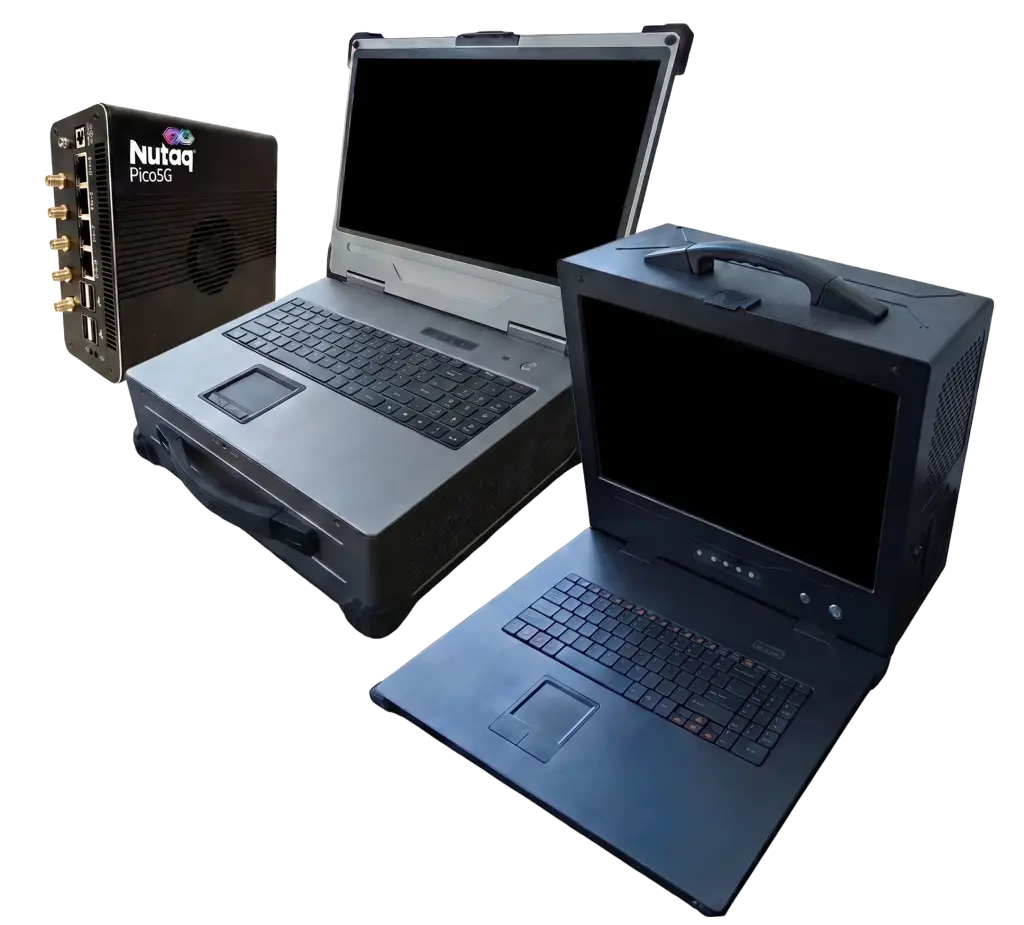
All the functionality and benefits of the next leading cellular testing platform in a portable compact chassis.
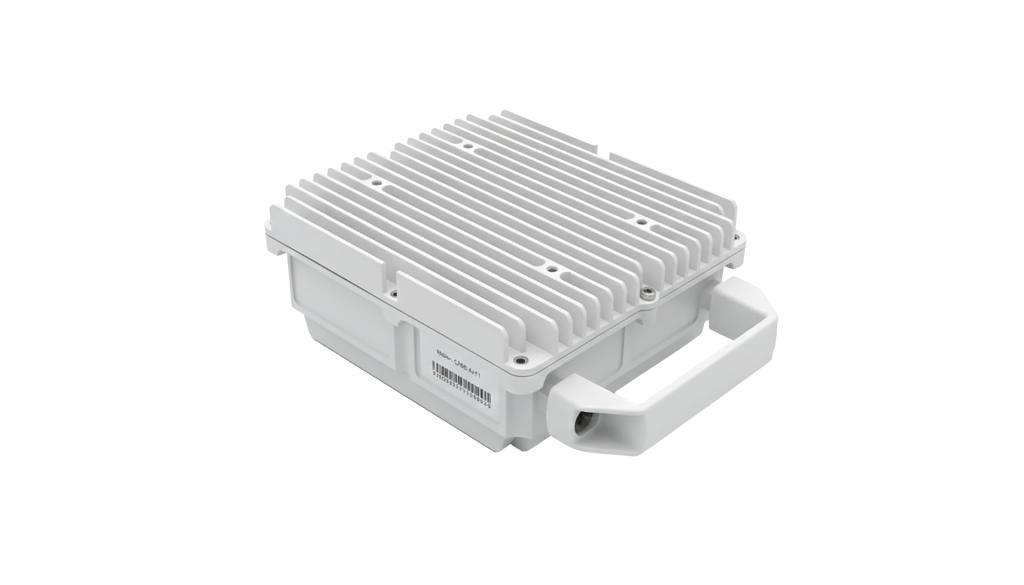
The PicoNet accelerates enterprise and industrial private network deployments with simplicity, flexibility, and carrier-grade performance.
Emulate thousands of User Equipment (UE) to test, validate and optimize LTE and 5G networks in lab or field environments with the Amari Simbox.
Emulate thousands of User Equipment (UE) to test, validate and optimize LTE and 5G networks in lab or field environments with the Amari Simbox.