
Testing and Private Networks for Telecommunications
Designed for validating devices, networks, and new cellular services.
Cellular Connectivity Solutions for Telecommunications
Telecommunications teams operate in an environment where interoperability, performance, and standards compliance are non-negotiable. Our solutions help mobile network operators, equipment vendors, and system integrators test devices, validate network behaviour, and de-risk new deployments — from early development through field trials — without leaving your desk.
Delivering Value to Telecom Teams
Accelerate Validation and Troubleshooting
The Pico5G provides a fully configurable 4G and 5G network—including RAN and core—allowing devices and applications to be tested under realistic network conditions from within the lab, allowing teams to identify performance issues, interoperability gaps, and configuration errors early.
Extend Testing Beyond the Lab
The PicoNet enables controlled field trials and localized deployments on private networks, supporting pre-commercial validation and pilot use cases without impacting live networks.
Solutions Support Nearly All Areas of Telecommunications
UE and modem validation across LTE and 5G NR
Network feature testing and regression analysis
Interoperability testing between devices and core networks
Proof-of-concept development for new services
Training and network experimentation in isolated environments
Solutions Designed for Telecommunications

The Pico5G delivers a complete, standards-based cellular network in a compact portable platform, enabling telecom teams to validate behavior across LTE and 5G without compromising flexibility or realism.
Ideal for:
UE and modem testing
Device interoperability and regression testing
Network feature validation (LTE, 5G NR, IoT variants)
Pre-conformance and troubleshooting
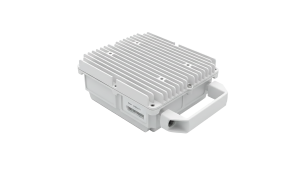
The PicoNet allows telecom teams to take validated configurations from the lab into the field—supporting controlled evaluation of coverage, performance, and system behavior—indoor and outdoor.
Ideal for:
Pre-commercial trials
Isolated or temporary network deployments
Demonstrations and proofs of concept
Training and operational readiness
Test With Confidence Before Going Live
From early device validation to controlled field trials, Nutaq solutions are designed to support the full telecom testing lifecycle—helping teams deploy new devices and services with confidence.
Related Content
Full Walkthrough for measuring the PSM Power Profile of the Skyworks SKY66430 NB-IoT and CaT-M1 device.
Understand seven critical IoT device testing mistakes that RF engineers and device manufacturers must address before deployment.

Put our engineers and the Pico5G platform to work for you — validating your cellular devices faster, at a fraction of the cost of building your own testing capability.
Frequently Asked Questions
Live carrier networks are shared, production environments where test traffic competes with commercial traffic and network configurations cannot be changed without impacting subscribers. For device validation, interoperability testing, and feature development, teams cannot reproduce specific network states, introduce controlled failure conditions, or test against pre-release protocol configurations without risking service disruption. A dedicated test environment using a standards-compliant network emulator provides the isolation, configurability, and repeatability that live networks cannot.
Formal conformance testing — conducted by accredited test houses using standardised 3GPP test suites — verifies that a device meets specific protocol specifications and is required for regulatory approval and network onboarding. Pre-conformance testing, conducted in-house using a configurable cellular test platform like the Pico5G Series, validates that a device connects, communicates, and behaves correctly under realistic conditions before formal certification. Pre-conformance testing identifies protocol issues, interoperability gaps, and performance problems while there is still time and flexibility to fix them — at a fraction of the cost of a failed formal conformance campaign.
Any device connecting to a carrier network typically requires some form of validation before onboarding: smartphones and tablets, IoT modules and embedded cellular chipsets, fixed wireless access (FWA) CPE, industrial gateways and routers, vehicular modems and TCUs, wearables and connected health devices, smart meters and utility endpoints, and any custom device using a commercial cellular module. As network operators introduce new features — 5G standalone, VoNR, network slicing, (e)RedCap — validation cycles must be repeated to confirm compatibility with the new network capabilities.2
5G NR introduces new frequency ranges (FR1 sub-6 GHz and FR2 mmWave), new radio access procedures (beam management, new numerologies), standalone and non-standalone architectures, and new protocol features including network slicing, (e)RedCap, URLLC, and NTN satellite connectivity.2 Key challenges include: SA vs. NSA architecture differences; NR-NTN for IoT devices; higher bandwidth channels (up to 100 MHz per carrier); and inter-working between NR and LTE during the transition period when both standards will be deployed simultaneously.
The Pico5G Series provides a complete, 3GPP Release 19 compliant 4G and 5G network — including RAN and core — in a portable platform.2 Telecom device validation teams use it to evaluate attach and detach procedures, bearer establishment, handover behaviour, voice call setup (VoLTE/VoNR/VoWiFi), protocol stack interactions, throughput and latency performance, and error handling under degraded conditions. Because it operates as a full eNodeB/gNodeB and EPC/5GC, it exposes device behaviour in response to real core network signalling.
Yes. The Pico5G Series is commonly used for interoperability (IOT) testing between UEs, modems, and the core network. Because it is fully configurable, teams can evaluate how different device firmware versions or chipset implementations behave against the same network configuration, identify compatibility issues between device protocol stacks and core network features, and reproduce field-reported issues in a controlled, reproducible environment. The WebSocket API enables automated test sequences that can run across multiple device configurations.
The Pico5G Lite is suited to single-device, single-cell validation of LTE, LTE-M, NB-IoT, and 5G SA. The Pico5G Plus adds multi-cell operation, 5G NSA, intra-gNB handover, and carrier aggregation — essential for UE mobility and multi-cell behaviour testing. The Pico5G Pro provides 100 MHz bandwidth per channel with native 4×4 MIMO and optional FR2 mmWave, important for high-throughput 5G NR device characterisation. The Ultra offers the highest cell count and channel density for parallel testing of multiple device configurations. Contact Nutaq to discuss your lab requirements.
The PicoNet enables telecom teams to deploy a controlled, isolated private LTE/5G network for field trials without impacting live commercial infrastructure. It supports indoor and outdoor deployments, covers a range of licensed frequency bands, and integrates radio and core in a single unit — simplifying staging and deployment logistics. By the end of Q3 2025, private cellular had grown to 1,907 deployments globally across 84 countries,1 reflecting the breadth of use cases being validated in pre-commercial and pilot environments.
Yes. The PicoNet provides a fully controlled, isolated cellular network environment well-suited to engineering training, internal innovation labs, and proof-of-concept development for new services. Because it operates independently of live network infrastructure, teams can experiment with network configurations, service architectures, and device integrations without risk of impacting production systems.
The Pico5G Series is optimised for the lab — it provides the configurability and reproducibility needed for structured device validation, regression testing, and pre-conformance work. The PicoNet is optimised for the field — it provides the coverage, capacity, and deployment flexibility needed for pilot networks, field trials, and production deployments. In a typical workflow, device validation is completed against the Pico5G in the lab, then the validated device configuration is deployed onto a PicoNet field trial. Both products are 3GPP compliant.2
Citations
- GSA, “Private Mobile Networks December 2025.” By end of Q3 2025, 1,907 organisations deploying private mobile networks across 84 countries; CAGR of 34% since 2020. https://gsacom.com/paper/private-mobile-networks-december-2025/
- 3GPP, Release 19 — 3rd Generation Partnership Project release that introduced and/or refined 5G NR RedCap (Reduced Capability), NTN (Non-Terrestrial Networks), and enhanced IoT features. https://www.3gpp.org/release-19
- International Electrotechnical Commission, IEC 62304:2006+Amd1:2015 — Medical device software life cycle. Referenced for pre-conformance context; the distinction between internal validation and accredited conformance testing applies broadly to UE device certification programmes. https://www.iec.ch/homepage