
Testing and Private Networks for Utilities
Designed for testing, validating, and deploying mission-critical utility networks, even in harsh outdoor environments.
Cellular Connectivity Solutions for Utilities
Utilities rely on cellular connectivity to support smart grid modernization, remote monitoring, and mission-critical operations. Our solutions enable power, water, and utility network operators, system integrators, and equipment vendors to validate devices, de-risk deployments, and deploy private LTE and 5G networks with confidence — from the lab to the field — even in harsh outdoor environments.
Built For Utility Challenges — Not Generic Connectivity
Validate Before You Deploy
The Pico5G allows utilities and vendors to test cellular IoT devices and applications in a controlled lab environment, mirroring real cellular networks, enabling early validation of performance, interoperability, and network behaviour—before devices reach the field.
De-risk Private Network Rollouts
The PicoNet enables field trials and operational private LTE/5G networks at substations, plants, yards, and remote sites, allowing for pilot coverage, latency, and reliability without committing to large-scale rollouts prematurely.
Do More With Nutaq Enabled Private Networks and Testing
Smart metering and advanced metering infrastructure (AMI)
Grid monitoring and protection systems
Distributed energy resource (DER) communications
Remote monitoring and control of substations and assets
Temporary or emergency communications networks
Solutions Designed for Utility Environments
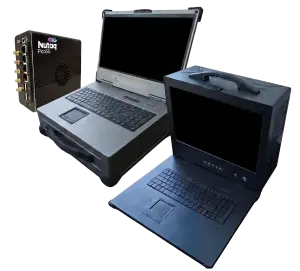
The Pico5G provides a complete, configurable cellular network in a compact portable form factor, allowing utilities and vendors to test devices, applications, and network behavior with confidence.
Ideal for:
Smart grid device validation
Cellular modem and gateway testing
Network feature evaluation (LTE, 5G NR, IoT variants)
Proof-of-concept development
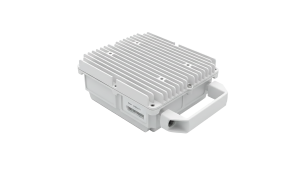
The PicoNet delivers local, reliable cellular coverage where public networks fall short — supporting private LTE and 5G deployments tailored to utility operational needs — indoor and outdoor.
Ideal for:
Substations and control sites
Generation facilities
Remote and temporary utility locations
Pilot deployments and operational networks
Prepare Today For Tomorrow’s Utility Networks
Whether you are validating cellular-connected devices or deploying a private LTE or 5G network, our solutions are designed to support the full lifecycle of utility connectivity—from lab testing to real-world operation.
Related Content
Emulate thousands of User Equipment (UE) to test, validate and optimize LTE and 5G networks in lab or field environments with the AMARI Simbox.

Put our engineers and the Pico5G platform to work for you — validating your cellular devices faster, at a fraction of the cost of building your own testing capability.
This article examines the technical and operational barriers utilities face when deploying private LTE networks.
Understand seven critical IoT device testing mistakes that RF engineers and device manufacturers must address before deployment.
Frequently Asked Questions
Utility networks are shifting toward smart grid architectures requiring reliable, low-latency, high-density communications across geographically dispersed infrastructure. Public cellular networks were not designed for the availability and determinism utility operations require. Private LTE and 5G networks support advanced metering infrastructure (AMI), distributed energy resource (DER) management, grid protection and automation, and remote substation monitoring — with the coverage, security, and QoS guarantees that public networks cannot provide.
Grid protection and automation can require latency as low as single-digit milliseconds for inter-device coordination in fault isolation and switching. Advanced metering infrastructure requires reliable delivery of small payloads from endpoints that may be in basements and underground installations where signal penetration is critical.4 DER management requires bidirectional, low-latency control links to distributed solar, wind, and storage assets. Worker safety requires robust voice and data connectivity — especially during large-scale restoration events when infrastructure may be damaged.
Public LPWAN networks such as LoRa and Sigfox operate on unlicensed spectrum with no guaranteed QoS, limited bandwidth, and no security baseline. NB-IoT and LTE-M, deployed on a private network, offer licensed-spectrum reliability, carrier-grade security, and the ability to support bidirectional control and firmware updates alongside simple telemetry — on the same infrastructure. For utilities requiring deterministic performance, integration with mission-critical control systems, or compliance with critical infrastructure security frameworks, private LTE/5G is typically the preferred architecture.
Utility networks in North America are subject to NERC CIP (Critical Infrastructure Protection) standards1 — mandatory cybersecurity requirements for entities operating the Bulk Electric System. NERC CIP requires utilities to identify critical assets, create control mechanisms, and enforce the logical and physical security of their systems.2 NERC CIP-005 Electronic Security Perimeter requirements apply to wireless technologies providing electronic access to utility networks.3 Private LTE/5G networks operated under the utility's own control are architecturally well-suited to meeting these isolation and access-control requirements, as opposed to public carrier connections where traffic traverses shared third-party infrastructure.
The Pico5G Series is used to validate smart meters and AMI endpoints, cellular-enabled grid protection relays, distribution automation devices, remote terminal units (RTUs) with cellular backhaul, IoT sensors for substations, water treatment facilities, and pipeline networks, DER control gateways, and field worker communication devices. Any utility asset intended for LTE, LTE-M, NB-IoT, or 5G NR operation can be evaluated in a controlled lab environment before deployment.
NB-IoT and LTE-M are the dominant cellular IoT standards for smart metering and AMI because of their low power consumption, long battery life, and deep coverage penetration — NB-IoT's lower frequencies provide excellent indoor penetration, beneficial for meters installed in basements.4 The Pico5G Series fully supports PSM (Power Saving Mode) and eDRX (Extended Discontinuous Reception) configuration, enabling engineers to characterise battery life and verify data reporting accuracy. Real-world smart meter deployments routinely achieve 10+ years of battery life using PSM and eDRX.5
The PicoNet is a private LTE/5G small cell solution that integrates radio access and core network in a single unit. It supports LTE and 5G NR across a broad range of frequency bands, including band 111, delivers up to 50 MHz bandwidth with 2×2 MIMO and up to 2×10 W transmit power for robust outdoor coverage, and runs on Ubuntu OS for edge application hosting. For utilities, the PicoNet can be deployed at substations, generation facilities, remote monitoring stations, and utility yards — providing dedicated coverage under the operator's control, independent of public carrier infrastructure.
Yes. The PicoNet is designed for rapid, flexible deployment, making it well-suited for emergency response coordination, field crew communications during large-scale restoration events, and temporary connectivity at staging areas or command posts. During major outage events where existing communications infrastructure has been disrupted, the PicoNet can be rapidly deployed to provide dedicated cellular coverage for restoration crews — enabling voice communications, real-time situational awareness, and coordination with control centres.
The PicoNet supports pilot deployments at a defined site — a substation, a generation yard, a water treatment facility — allowing utilities and system integrators to evaluate coverage, latency, and device behaviour under real operational conditions before committing to a full-scale rollout. This mirrors the broader industry pattern: private mobile network deployments have grown at a CAGR of 34% since 2020,6 driven in large part by phased, use-case-led adoption strategies rather than large-bang rollouts.
A structured approach has three stages. First, use the Pico5G Series to validate the specific devices — smart meters, RTUs, protection relays, sensors — against a controlled LTE/5G network and confirm connectivity performance. Second, deploy a PicoNet pilot at a single site and measure real-world performance against latency, availability, and throughput targets. Third, expand coverage and device count based on validated results. Nutaq can support each stage with configuration guidance, onsite support, and training. Contact Nutaq for more information.
Citations
- North American Electric Reliability Corporation (NERC), Critical Infrastructure Protection (CIP) Standards, CIP-002 through CIP-014. Mandatory cybersecurity standards for entities operating the Bulk Electric System (BES) in the United States, Canada, and parts of Mexico. https://www.nerc.com/pa/Stand/Pages/CIPStandards.aspx
- TechTarget / SearchSecurity, “What is NERC CIP (Critical Infrastructure Protection) and how does it work?” NERC CIP requires utilities to identify critical assets, enforce logical and physical security, and recover affected assets following cybersecurity incidents. https://www.techtarget.com/searchsecurity/definition/North-American-Electric-Reliability-Corporation-Critical-Infrastructure-Protection-NERC-CIP
- U.S. Department of Energy, “Wireless System Considerations When Implementing NERC Critical Infrastructure.” CIP-005 Electronic Security Perimeter requirements apply to wireless technologies providing electronic access to utility networks. https://www.energy.gov/oe/articles/wireless-system-considerations-when-implementing-nerc-critical-infrastructure
- Onomondo, “NB-IoT or LTE-M? Choosing LPWA for smart meter connectivity,” March 2026. NB-IoT operates on lower frequencies providing excellent deep indoor penetration, beneficial for smart meters installed in basements or areas with dense building structures. https://onomondo.com/blog/lpwa-smart-meter-connectivity/
- Spenza, “NB-IoT vs LTE-M vs 5G RedCap: IoT Connectivity Guide (2026),” April 2026. Real-world smart meter deployments routinely achieve 10+ years on a single battery using PSM and eDRX. https://spenza.com/esim/nb-iot-vs-lte-m-vs-5g-redcap/
- GSA, “Private Mobile Networks December 2025.” By end of Q3 2025, 1,907 organisations worldwide deploying private mobile networks, growing at a CAGR of 34% since 2020. https://gsacom.com/paper/private-mobile-networks-december-2025/