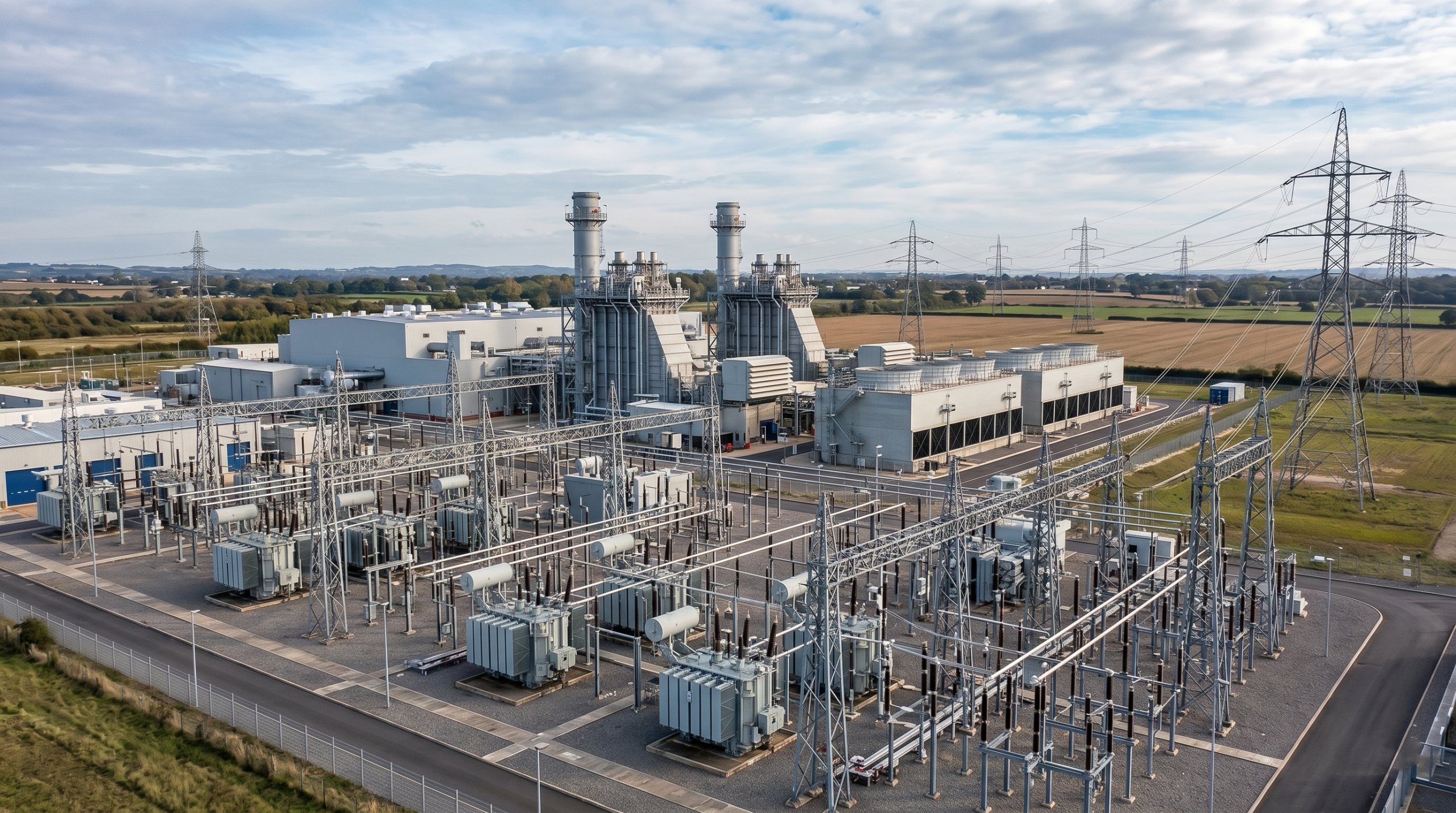
Utilities are turning to private LTE (Long-Term Evolution) and 5G networks to modernize aging infrastructure, support smart grid operations, and connect remote sites that traditional communication systems struggle to reach. Unlike general enterprise deployments, private LTE network utilities must operate across dispersed outdoor environments—substations, generation plants, transmission corridors, and water treatment facilities—where conditions demand ruggedized equipment, specialized spectrum, and careful regulatory navigation.1
Despite the clear benefits of dedicated wireless connectivity for utilities, deployment remains complex. Barriers range from the physical—outdoor coverage across large, often hazardous sites—to the regulatory, including spectrum access and compliance with North American frequency allocations. Off-the-shelf enterprise solutions frequently fall short in these environments, leaving utilities to navigate a fragmented vendor landscape or delay deployment altogether.2
This article examines the technical and operational barriers utilities face when deploying private LTE networks, why standard commercial solutions often don’t fit, and how purpose-built infrastructure like Nutaq’s PicoNet is designed to address these challenges from the ground up.
Common Technical and Operational Barriers in Utility Private Network Deployments
Barriers, in their most fundamental sense, are obstacles that prevent movement or progress—physical structures like fences, or more complex impediments such as regulatory constraints and environmental challenges.3 For utilities deploying private cellular networks, these barriers manifest across multiple dimensions.
Environmental and Coverage Challenges: Utility sites are rarely compact office parks. They include outdoor substations, remote generation facilities, sprawling distribution yards, and infrastructure spread across kilometers of challenging terrain. Coverage must extend reliably across these areas, often with limited opportunities for traditional tower-based infrastructure. Weather exposure, electromagnetic interference from high-voltage equipment, and the need for fail-safe communication during grid events add further complexity.
Spectrum and Regulatory Constraints: Unlike unlicensed spectrum or general commercial bands, utilities in North America often require access to specific frequency allocations suited to their operational needs and regulatory standing. Securing the appropriate spectrum, ensuring compliance with federal and local regulations, and coordinating with existing public safety and critical infrastructure users all present barriers to deployment.
Device and Endpoint Compatibility: Utility IoT (Internet of Things) devices—smart meters, grid sensors, SCADA (Supervisory Control and Data Acquisition) endpoints, and specialized monitoring equipment—must reliably connect across the chosen cellular standard (LTE-M, NB-IoT, or broadband LTE). Ensuring interoperability, verifying performance under field conditions, and managing firmware across heterogeneous device fleets require both testing infrastructure and operational flexibility that generic solutions seldom provide.
Lifecycle and Customization Requirements: Utility infrastructure is built to last decades. Communication networks must match that longevity, support evolving standards, and allow for phased rollouts and pilot programs before full-scale deployment. This lifecycle approach demands modular, field-testable systems—not one-size-fits-all appliances.
Why Off-the-Shelf Enterprise Solutions Fall Short in Utility Environments
Most commercial private LTE solutions are designed for indoor enterprise deployments: warehouses, manufacturing floors, hospitals, or corporate campuses. These environments are climate-controlled, have reliable power, and occupy relatively compact footprints. Utilities operate under fundamentally different conditions.
Form Factor and Environmental Tolerance: Indoor base stations are not built to withstand the temperature extremes, moisture, dust, and UV exposure typical of outdoor utility sites. Standard enterprise equipment often lacks the necessary IP (Ingress Protection) ratings, thermal management, or mechanical durability for substation or remote plant deployment.
Frequency Band Support: Many commercial systems default to CBRS (Citizens Broadband Radio Service) Band 48 or other enterprise-friendly allocations. While useful for general industry, these bands may not align with utility-specific spectrum holdings or public safety partnerships. Utilities require equipment that supports the bands they are licensed to use—not the bands a vendor happens to offer.
Coverage Models: Enterprise solutions optimize for high-density, short-range connectivity. Utilities need the opposite: broader coverage across lower device density, with sufficient range to connect sensors and endpoints distributed across large outdoor areas. This requires different antenna configurations, power output, and propagation planning than typical commercial offerings provide.
Outdoor and Remote Site Coverage Requirements for Utility Infrastructure
Utility private networks must serve environments ranging from compact substations to remote generation sites spanning hundreds of acres. Coverage requirements are dictated by the physical layout of assets: transformers, switchgear, meters, environmental sensors, and control systems that cannot be easily relocated to suit network topology.1
Site-Specific Deployments: For localized, high-value sites like power plants, substations, and water treatment facilities, utilities often deploy site-specific private LTE infrastructure tailored to the physical and operational characteristics of each location.4 This approach allows for precise coverage tuning, interference management, and integration with existing facility networks.
Ruggedization and Installation Flexibility: Equipment must mount securely on utility poles, substation walls, or equipment racks exposed to the elements. It must operate reliably through seasonal temperature swings, withstand vibration, and integrate with backup power systems. Installation and commissioning must be achievable by utility field crews, not require specialized RF engineering teams for every deployment.
Spectrum and Regulatory Considerations for Utilities in North America
Spectrum access is one of the most significant barriers—and opportunities—for utility private LTE deployments. In North America, utilities may access spectrum through direct licensing, public-private partnerships, or shared allocations with public safety agencies.
Band 14 for Public Safety and Utilities: Band 14 (700 MHz) is designated for public safety and, in certain contexts, critical infrastructure including utilities. This low-frequency band offers superior propagation characteristics for outdoor and wide-area coverage, making it well-suited to the dispersed infrastructure typical of utility deployments. Nutaq’s PicoNet supports Band 14, enabling utilities to leverage this spectrum for field trials, operational networks, and interoperability testing with public safety partners.
Band 111 for Utility-Specific Use: Nutaq’s PicoNet is also able to support Band 111, a frequency allocation relevant to utility deployments. This band provides additional flexibility for utilities seeking dedicated spectrum for smart grid and operational technology (OT) networks.
Regulatory Navigation: Deploying on licensed spectrum requires coordination with federal regulators, compliance with emission limits, and often collaboration with neighboring spectrum users. Testing and validation infrastructure—such as PicoNet—allows utilities to verify device performance, simulate network conditions, and de-risk deployment before committing to full-scale rollouts.1
How PicoNet Addresses Deployment Barriers with Outdoor-Capable Design
Nutaq’s PicoNet is designed specifically to support the deployment lifecycle of utility and industrial private networks—from initial device testing and pilot trials to operational infrastructure at substations, plants, and remote sites.1
Outdoor-Ready Form Factor: Unlike indoor enterprise base stations, PicoNet is built to operate in outdoor utility environments. Its design accounts for temperature extremes, moisture exposure, and installation flexibility required for substation and remote site deployment.
Support for Utility-Relevant Frequency Bands: PicoNet supports Band 14 and Band 111, aligning with the spectrum allocations most relevant to North American utilities. This allows utilities to conduct field trials, validate device connectivity, and deploy operational networks using the frequencies they are licensed to use—not generic enterprise bands.
Field Trial and Pilot Enablement: The PicoNet enables utilities to conduct field trials and pilot programs before committing to large-scale infrastructure investments. This de-risks deployment, allows for coverage and latency validation, and supports phased rollouts aligned with budget cycles and operational priorities.1
Customizable and Modular: PicoNet‘s architecture supports customization based on site requirements, device types, and spectrum allocation. This modularity allows utilities to adapt the system to specific use cases—from smart meter connectivity to SCADA backhaul—without vendor lock-in or restrictive platform limitations.
Conclusion
Deploying private LTE networks for utilities is not simply a matter of purchasing hardware and turning it on. The unique environmental, regulatory, and operational requirements of utility infrastructure demand purpose-built solutions that account for outdoor coverage, specialized spectrum, and long-term operational resilience. Off-the-shelf enterprise systems, designed for controlled indoor environments and generic frequency bands, frequently fall short.
Nutaq’s PicoNet addresses these barriers directly: with support for utility-relevant spectrum including Band 14 and Band 111, an outdoor-capable design suited to substation and remote site deployment, and a flexible architecture that supports field trials, pilot programs, and operational networks. For utilities navigating the transition to smart grid connectivity and private LTE infrastructure, PicoNet provides a tested, field-ready platform designed for the realities of utility operations—not generic enterprise use cases.
Ready to de-risk your private LTE deployment? Learn more about PicoNet’s capabilities for utility applications at https://nutaq.com/piconet/ or contact our team to discuss your specific site and spectrum requirements.
Frequently Asked Questions
Q: What spectrum bands does PicoNet support for utility deployments?
PicoNet supports Band 14, a 700 MHz allocation used by public safety and critical infrastructure including utilities across North America, and Band 111, which is relevant to utility-specific deployments. These bands offer the propagation characteristics and regulatory alignment needed for outdoor utility sites such as substations, plants, and remote facilities.
Q: Can PicoNet be used for both testing and operational deployment?
No. While it is theoretically possible the PicoNet ca support the full deployment lifecycle, it was designed specifically for private network deployments. However, it can be used in conjunction with the Pico5G, a fully portable compact network emulator platform designed for device testing and trials. This allows utilities to validate device connectivity, coverage, and latency in pilot programs before scaling to full operational infrastructure, reducing deployment risk and capital exposure.
Q: How does PicoNet differ from standard enterprise private LTE solutions?
Unlike indoor enterprise base stations designed for warehouses or office campuses, PicoNet is built for outdoor utility environments. It supports utility-relevant frequency bands (Band 14 and Band 111), is designed to withstand outdoor installation conditions, and provides the coverage characteristics needed for dispersed infrastructure such as substations and remote generation sites.
Q: What types of utility sites are best suited for PicoNet deployment?
PicoNet is well-suited for localized, high-value utility sites including power substations, water treatment facilities, generation plants, distribution yards, and remote infrastructure requiring dedicated wireless connectivity. It enables site-specific private LTE networks tailored to the physical layout and operational requirements of each location.
Q: Does deploying PicoNet require specialized RF engineering expertise?
PicoNet is designed to be deployed and configured by utility field teams with appropriate technical training. While RF planning and site surveys are recommended for optimal coverage, the system’s modular design and support resources reduce the need for external specialized engineering for every deployment, enabling utilities to manage rollouts internally.
──────────────────────────────────────────────────────────
References
- “Testing and Private Networks For Utilities – Nutaq.” Nutaq. Accessed April 22, 2026. https://nutaq.com/testing-and-private-networks-for-utilities/.
- “Testing and Private Networks for Manufacturing – Nutaq.” Nutaq. Accessed April 22, 2026. https://nutaq.com/testing-and-private-networks-for-manufacturing/.
- “140 Examples of Barriers – Simplicable.” Simplicable. July 30, 2025. https://simplicable.com/society/barriers.
- “Connected Utilities : How Utilities Are Deploying Private Networks.” TeckNexus. Accessed April 22, 2026. https://tecknexus.com/connected-utilities-deployment-architectures-and-spectrum-strategies-for-utility-private-networks/.